I’m posting this today, not because any of us think what happened to George Floyd was okay–I’ve yet to meet the person who thinks that–but because we, as Catholics, need to be reminded that it’s not enough just to think it’s not okay.
Our bishops have talked about the realities of institutional racism through this document, “Open Wide Our Hearts: The Enduring Call To Love.” They’ve told us also that we have a responsibility to act, and that the first part is to recognize how we are complicit in the continuation of racism in our country. And that is the part too many in the Catholic community are unwilling to do. This week I’ve encountered Catholics who won’t even read this document because it calls us into that hard examination of conscience, and they refuse to believe there’s anything to examine.
This is one of those times when being Catholic requires us to be intentional. Because if we aren’t, then we aren’t really being Catholic at all. We’re letting pre-determined worldly values determine how we interact with the world, rather than doing the hard work required when our faith directs us.
I went to a park to meet a friend and her son, my godchild, to social-distance celebrate a birthday. She was upset, and I didn’t immediately realize why. She had to lead me almost all the way there.
I have rarely felt the privilege of my own skin color so keenly.
Because unlike me, she and her son are not white. And while the events of the past week, beginning in Minnesota and spreading all over the country, are a source of grief to me, for her they are inescapable realities that she has to wrestle with on a daily basis.
What is the future for her child? For all her male loved ones? Can they not go running in their neighborhoods? Do they really need to be afraid every time they see a police officer?
We rarely recognize how deeply our unconscious biases affect us. How many ways we have taken worldly values (self-reliance, personal responsibility, small government, and money, always money–it’s my money, no one has a right to it, especially a central authority, even to help lift up vulnerable populations) and tried to use our faith to justify them.
It’s not that those values are without merit. Of course they have merit. But they so easily become idols, when the Gospels make it clear that people ALWAYS come first.
As my friend and I talked, I could empathize–sort of. The cluelessness of white America is, for her, something like the cluelessness I encounter about issues surrounding disability. Whenever I share a frustration I experience with institutions that interact with my daughter–health care, schools, etc.–I get pushback from people who oversimplify the situation. People who don’t understand that the pat solutions that seem so obvious to them simply don’t work. The tangled complexities of the situation are invisible to those outside it. Even those who are closest to us generally don’t “get” it, because they haven’t experienced it themselves.
Last fall I tried to explain our family’s struggles with special ed to a group of health care workers who were studying issues surrounding special needs. I thought I could tell the story in twenty minutes. At twenty-five minutes, I realized I was only a quarter of the way through, and the audience was zoning.
Even an audience of people most poised to understand really couldn’t “get” it.
So I understood, on an intellectual level, my friend’s deep frustration and woundedness. But I don’t *understand* what it’s like to be black in America. Not at a deep, visceral level, the way the black community does.
The only solution to all this is to “hear with open hearts,” as the pastoral letter from the US Bishops on racism teaches. To accept that what we cannot “get” at a visceral level is nonetheless real, and to recognize that it calls for a response from us. Not just an express-my-outrage-on-social media, write-a-blog-post response, but a “don’t blame the victim for the way things got out of control” response. A “hold my leaders accountable for their inflammatory words and lack of positive action” response. A “quit giving them a pass because they check the box on a single issue, regardless of how poorly they reflect the rest of my faith” response.
There are basically two kinds of posts filling up my Facebook feed right now. I’m sure it’s the same for you.
On the one hand, there are the conspiracy theories and memes filled with outrage over having to mask or social distance or really, having to endure limits and inconvenience of any kind. The we-should-just-open-up-and-get-herd-immunity posts. The the-numbers-are-always-changing-and-that’s-a-sign-that-it’s-all-baloney posts. Yesterday I saw a meme that bemoaned ruining our economy for a disease with a death rate of only .1%. (FYI: I went to the CDC and did the math, because I’ve been wrong before. The death rate is 6%.)
On the other hand, there are strident posts that imply that it’s universally too soon to open up, that everyone should stay in lockdown, that no church anywhere under any circumstances should sing, because it’s dangerous. Posts that pass judgment on others’ choices, without knowing the circumstances and in some cases, exaggerating the level of the violations.
Those who share the first type of post are almost exclusively from rural areas where the case load has been low. Those who share the second are almost exclusively urban dwellers living with ongoing trauma caused by the exploding body counts in their vicinities.
The thing is, both these points of view contain nuggets of truth. Where I live, it makes no sense to deny assembly singing; we’ve only had one death and a hundred cases since the whole thing began. That would be a precaution that causes unnecessary damage to communities without any benefit.
On the other hand, there *is* real mental health suffering going on because of the shutdowns; I’ve thought since day one that we could have a whole generation in need of counseling after this is over. I have four children. I did counseling myself for the first time in my life during this pandemic. Parenting during this is a nightmare for a person who suffers scrupulousness and, by extension, anxiety. What if I’m the one who ends up passing the disease to dozens of others and causes the deaths of hundreds because I’m too cavalier? What if the hospitals get overrun and my developmentally disabled daughter is the one who has to be denied a ventilator?
But because I’m so sensitized to my children’s mental health, to my own anxieties, and to the high stakes for my own family, I’m really cognizant of the need for balance.
In some places (like where I am), the damage being done by shutdown might, in fact, be worse than the damage avoided.
But maybe not. Because maybe shutting down prevented us from becoming a hot spot. Prevented us from the unbelievable anguish of burying our loved ones without being able to say goodbye or gather to remember them and send them off to Heaven.
The trouble is, we don’t know. We won’t know until it’s over and all the data is in—and maybe not even then. In real time, the situation is always in motion; the numbers change because new information comes to light, not because of some great conspiracy.
There *are* places where the fears are totally justified. As we, out here in the low-caseload areas, start reopening, it’s tempting to assume that what is true here is true everywhere. And then, to judge others for being more cautious. And our lack of sympathy causes people in areas where the danger is real to react more strongly—which makes us lash out more strongly still—which makes them angry…
It’s American tribalism on full display, in all its ugly, unchristian glory.
The beautiful thing about being human is that we are capable—if we will choose to exercise the ability—of adapting our understanding based on new information. But when the stakes are so high, our Christian responsibility to be cautious about what information we choose to partake of is more crucial than ever.
I propose that as Christians, our responsibility—our DUTY, in fact—is to check the bias of EVERY source BEFORE we click through, and to refuse to click through to any source that leans strongly right or left. Moderately left, moderately right, these sources are balanced enough that we can properly form our consciences. Clicking through to extreme sources only encourages greater extremism. If we want our media to behave with integrity, we have to quit rewarding them for misbehaving. If we want integrity in our news reporting, we have to demand it by not supporting those who violate our trust.
Frankly, on this Memorial Day, committing to greater integrity in our information consumption seems like a good way to honor those who gave their lives to protect this country. Don’t you think?
The past two weeks have been really intense for me as it is crunch time/deadline days for preparing presentations for the NPM (National Association of Pastoral Musicians) convention, which went online this year because of COVID-19. At the same time, where I live we are opening up. From this point forward, the discernments get harder. Now we have to weigh our responsibility to uphold the life and dignity of our fellow human beings against the danger of being so overprotective of physical health that we cause lasting damage to the emotional and mental health of ourselves and those we love. To say nothing of causing unnecessary suffering from deepening poverty, as more economic damage happens.
For weeks before opening, we’d had virtually no new cases where I live, so the calculation looks quite different here than it does in many other places. In some ways, it makes it more difficult. How long can we remain isolated from those we love? Yet if we loosen up in some areas and loved ones loosen in others, then we’ve both just multiplied our exposures. My state has been open 2 1/2 weeks now, and naturally we are seeing cases again. Not a lot, but to see regular cases after weeks of almost none makes it clear that we can’t be cavalier.
Which brings us, among other things, to the “do we mask?” question that has become yet another a lightning rod, another opportunity for political division in our country. The reaction of certain quarters of our population (“I’m not wearing a mask! When I woke up this morning I was in a free country!”) is what, specifically, made this Chesterton quote jump out at me this morning. This is one of those moments in which we are challenged to recognize where a worldly value has come to be more important than Godly ones. Has become an idol.
I don’t wear a mask at all times, and in masking, in opening up, every moment requires a discernment for me to make sure I’m practicing what I preach. Or at least, to try. I don’t like it, but it is the spiritual exercise of life right now–for all of us.
Background image by Public Domain Images, via Pixabay
It’s been a hard slog, the last couple of months. Although Memeland USA has tried to lighten the mood by joking about it (my personal favorite was a picture of Doc and Marty, with the words “First Rule of Time Travel: Never go to 2020!”), the humor is only an attempt to bleed off some of the stress. Some among us are struggling financially because of lost income. Some because of the stress of illness or death–coronavirus-related or not–in a time when families can’t even gather to grieve. Some because mental health is hard to maintain in a time of anxiety and isolation.
That last was the struggle for me and my household. It took us a full month to get our equilibrium–which I achieved partly by counseling, partly by a 100% withdrawal from all news sources. And prayer, of course, but prayer guided me to those real-world solutions. Prayer is rarely a fix-all on its own. In prayer, God guides you to what *else* you need. God is the creator of science and psychology, after all.
I still have to be vigilant about mental health in certain quarters in my family, but I know we had it pretty easy compared to others. My Facebook feed is filled, top to bottom every day, with evidence that more people are still struggling than not.
I’ve started dipping a toe back in the news now, and the vehemence and acrimony of the protests against stay-at-home orders and masks are really striking. I heard a report this morning that in Stillwater, Oklahoma, a man threatened a business owner with a gun because he didn’t like the citywide requirement to wear a mask inside businesses. I mean, really? REALLY??
Full disclosure: I’m a flute player. Wearing a mask makes me feel like I’m suffocating. But I’m wearing them anyway, not when I’m outside, but when when I go to the grocery store or the hardware store. Why? Because I trust the medical authorities who say this is one small sacrifice we can make for the greater good.
That news story this morning just blew my mind. I don’t know what that man’s beliefs are. What I can say for certain is that his actions show a lack of respect for life and the Gospel. The Christian call is about self-emptying, about placing others’ needs ahead of our preferences.
And that’s my point for today. The whole point of being “intentional” about the faith is to take it out of the realm of the vague generalizations. It’s easy to talk in general about self-emptying, but the real test is what happens when you’re asked to make a sacrifice for others. Especially when you’re already struggling with loss of income or freedom of movement or mental health or loved ones.
For years, we in the religious community have criticized American culture for being hedonistic, for the idolization of instant gratification and “me, me, me.”
Those are totally just criticisms.
But the response to this pandemic shows that hedonism, instant gratification, and “me, me, me” is just as much a problem among religious people. (How many of those signs demanding an end to stay-at-home orders invoke God?)
This pandemic is nothing if not a series of opportunities to make sacrifices. When I think of people in Italy and Spain, who weren’t even allowed outside (because where would they go without encountering others?), it is abundantly clear to me that my stay-at-home order, which allows for biking and hiking and playing outside and taking walks in the neighborhood and going to the grocery store and on and on and on, is really a *very* small ask for the health of the community.
And now, as my community begins to open up–today, in fact–the discernments are going to get more complex. With schools and businesses closed, there wasn’t really anywhere to go, anyway. We had no choice but to honor the greater good by staying home.
Now, we have to start learning a new balance, because as important as “flattening the curve” was, economic motion is vital to the community, too.
But we can’t be cavalier about it. To be a Christian in this new reality means we have to think, rethink, and rethink again. All the rules and rituals we take for granted have to be re-examined. How do we best balance the safety of the community and the need to slowly expand exposure to this new virus, against the need to get the economy moving again so that everyone can regain the dignity inherent in work?
It’s inevitable that for the foreseeable future, we’re all going to have to give up things we’d like and deny ourselves things we’d like to do on our own schedule, but which now have to be planned around the greater good. It’s not going to be fun.
But we can view this as an invitation to grow in faith and holiness–by self-emptying, by doing the things we don’t like for the greater good.
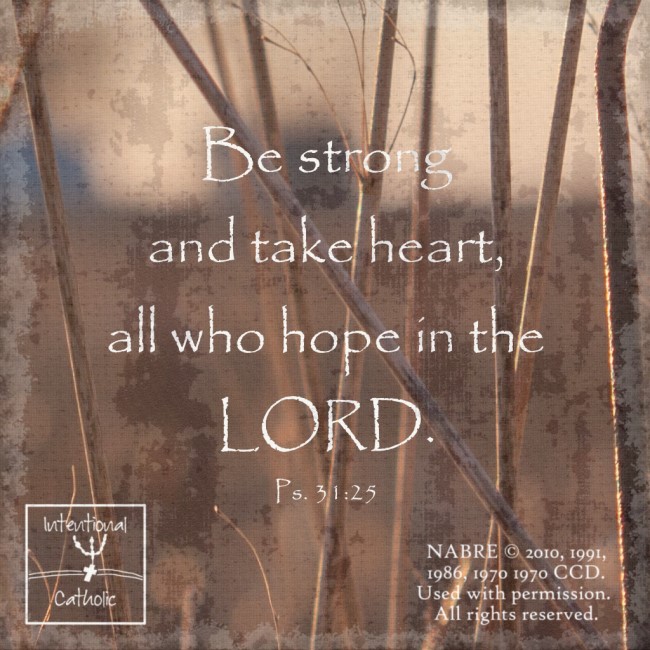
I’m going to switch focus for a while to words of comfort and hope… for my own sake as well as, I would imagine, everyone else’s Only one comment to go with this quote, which felt like balm on my own soul this morning: when I went online to doublecheck the spelling of St. Francis de Sales’ name, this was in the Wikipedia preview biography about him: that he was “noted for his deep faith and his gentle approach to the religious divisions in his land resulting from the Protestant Reformation.”
We have religious divisions of our own. St. Francis de Sales might be a great model for us all.
Ever since “it’s the economy, stupid,” this has been how every issue is approached, both personal and societal. Who am I kidding? If the Vatican II bishops were talking about this, clearly it’s been this way since before the 1990s. But it’s impossible to escape the message these days. No matter what crisis is happening (coronavirus is one, but there have been plenty of other instances), the go-to response is always “how is it going to impact the economy?” As if that were the only–or even the most–important factor.
As a Catholic striving to put my faith above all else–far, far above money, which is supposed to be how we survive and do good in the world, not the defining factor of existence–I find this fixation problematic. We say we want to be a Christian nation, but that only holds as long as the topic is some moral issue that costs me nothing, because it doesn’t impact me personally. As soon as it’s a Gospel directive that affects *my* pocketbook, it’s a whole different story.
I’ve never succumbed to communal panic about crises. The closest I came was my senior year of high school, when some dude who’d “never been wrong” in predicting an earthquake predicted the biggest one ever on the New Madrid Fault, and it happened to line up with the day I was out of town auditioning for all-state band. I think my response was to pack a blanket in the car.
So it felt very… wrong… somehow, yesterday, to go to the grocery store a day early and spend more than twice what I normally spend on a week’s worth of groceries to freeze–vegetables, snack packs with nuts & cheese, milk & pizza makings. It felt like abandoning a long-held principle.
But if things do follow recent patterns, we could find ourselves quarantined in our home for two weeks, and if that happens, well, I have six people to feed. Extra groceries seems like a reasonable precaution.
Here’s what I’m realizing this week: in the coronavirus era, more than ever, living the faith intentionally requires humility and self-checking one’s biases.
I, for instance, have been very resistant to the limitations on worship that have come down. But I remind myself that devotion to purity of worship is a golden calf just as deadly as idols of political philosophy or money. There are immuno-compromised people to consider, and their dignity is more important than the externals of worship.
We all have some hangup to get over. Some people are so certain that “on the tongue” is the only proper way to receive the Eucharist, they are unwilling to bend in the interest of public health. Others insist we shouldn’t ban the Cup or stop the sign of peace because obviously God will protect us.
For all of us, the coronavirus outbreak is a wakeup call. For years, we’ve been warned that something like this was inevitable, but we all shrugged it off.
And now that it’s here, we’re reaping the fruit of our collective failure to listen and compromise. While Americans up and down the political food chain have been busy screaming at each other about a handful of hot button issues, a bunch of critical things have been ignored. We’re not prepared for a health crisis like the one China and Italy have been facing. This morning, a family member sent the text of an article from the Economist (a British magazine which is rated “least biased” by Media Bias/Fact Check, a rare distinction), which stated that “In 2010 the CDC budget was $12.7 billion in current dollars; today it is $8 billion.”
Meanwhile, the talk in some quarters is more tax cuts. Tax cuts *might* stimulate some minor economic movement (although with everything closed/canceled, what are we going to spend it on?), but the nation is already deeply in debt. You can’t keep cutting government’s funding and expect it to be able to carry out its proper function–i.e. the protection of the population.
Our basic vocation as Christians is to care for each other. Sometimes that’s on an individual basis, person to person. But if we want to be a “Christian” nation, then we should view that as a collective, societal vocation. To accomplish that is going to require taxes. Taxes are not evil; the pandemic illustrates that some functions simply *cannot* be carried out on an individual basis. They *require*, by definition, centralized intervention. We can’t hold any philosophy, whether it’s Communion under both species, Communion on the tongue, or low taxes, so tightly that we give up the thing that’s most important–the Christian call to care for each other.
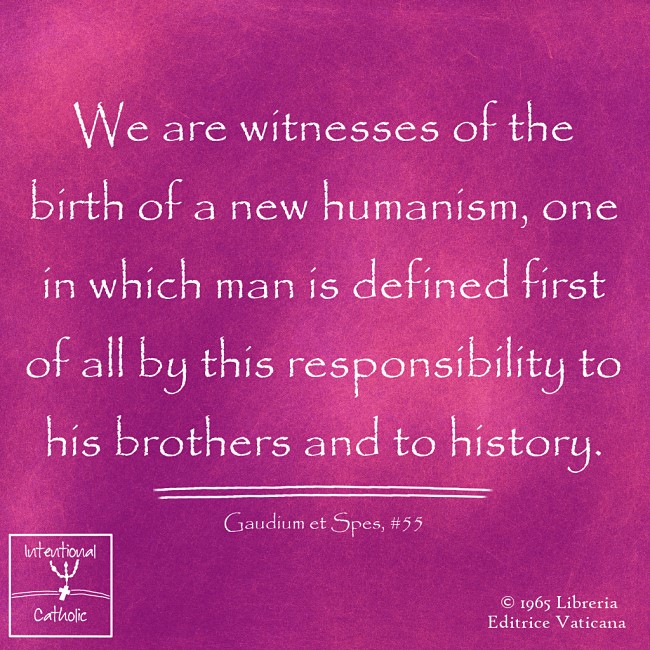
This seems like such a simple quote. I was going to let it stand without commentary, but I realized that this is really the essence of the convictions of all Christians who are passionate about social justice. To be a Christian is to care, in a self-emptying, physical, sacrificial way, for others. And to recognize that the things we do now have ripples down through history, on generations not yet born.
This quote expresses why we have a responsibility to act on environmental issues, on racial issues, on issues of poverty and inequality–the whole range of questions that are the most uncomfortable to address, because they challenge cherished ideals of self-reliance and rugged individualism.
This doesn’t require much commentary from me–we see it in action right now in the world. The Church has little moral authority in the world, and one of the big reasons (though not the only one) is the sex abuse scandal. We tend to be kind of a passive laity–and I’m pointing fingers at no one, because I feel as powerless and baffled on how to fix things as anyone else–counting on the vertical structure of the Church to fix the problem, while we go on with business as usual. Clearly, it doesn’t work. There *has* been harm inflicted on the spread of the Gospel, and that blame lies with the Church leadership for continuing to bungle and protect itself–but also on us, the laity, for clinging to the way things have always been done, and not stepping up to be more active in our faith and our Church, when clearly the way things have always been done is no longer sufficient for the times and issues we face.
I don’t know what the solution is. But there has rarely been an excerpt that has seemed so clearly written for this moment in time, even though it was written fifty years ago.



 Intentional Catholic