It’s OUR fault, too

Photo by Anete Lusina on Pexels.com

This morning as I was reading this reflection written by a Steubenville alum, this quote stuck out at me:

“I’m scared that if I pull this thread and start to doubt and reexamine my experiences at Franciscan, my faith will start to unravel, too.”

As I watch people very close to me shedding their Catholic faith, it is clear to me that how the Church, institutionally, and how we, as individual Catholics within it, represent Christianity MATTERS. It can lead people to Christ, but lately it seems to me that it more often damages the faith of others. I think about my own culpability in this as, over the past years, I have been so often frustrated by how things are going in the Church, and express that frustration at home.

But there is also the reality that those frustrations are pointing to something real.

A while back, I wrote about the sin of scandal. Our disconnect between the faith we profess and the things we say, the attitudes we hold, and the candidates and policies we support, have an impact on others. When the Church fails the way it did in the abuse of minors over generations; when it fails the way it did at Steubenville, and people leave, it is hard not to think of Jesus saying in Luke 17: Those of you who lead these little ones astray…. better off to hang a millstone around your neck and jump in the water.

It matters, how we interact with the world. And this applies to abortion, yes, but it applies every bit as much to guns and environment and the dismissal of women who were assaulted and the embrace of lies about stolen elections and continued support of politicians who claim Christianity while brazenly breaking commandments by telling those continued lies.

These. Things. MATTER.

These things DRIVE PEOPLE AWAY FROM CHRIST.

A frequent commenter here often laments how the turning away from God is the source of all our problems in modern America. Well, that’s true, though it has been true at every moment throughout history; it’s not a new problem. The veneer of Christianity in the past covered a lot of not-Godliness.

But we cannot conveniently ignore the reality that when we represent God in, forgive my bluntness, crappy ways, WE also bear responsibility when people turn away from God.

Guns. Again.

Photo by Pixabay on Pexels.com

When the school shooting happened last week, I was on a much needed, long-delayed 36-hour overnight away with my husband.

One of the ways I’ve been trying to deal with the question of anger versus seeking Godly justice is simply to cool down my emotional temperature by insulating myself from the news. It’s hard to keep the temperature down when you’re constantly being triggered.

These days, most of my car time is devoted to my chromosomally-gifted daughter’s love for pop music, so I don’t really have time to listen to much news. When I do turn on the news, I often feel my heart crunching, my chest compressing my breath, and I recognize that stillness is what I actually need. So I often turn off the radio altogether and drive in silence.

Thus, I didn’t actually know there was a shooting until pretty late, and it wasn’t until Friday that I realized it happened at a private Christian school.

My first reaction, before I knew it was a Christian school, was that it wasn’t worth getting angry, because I know perfectly well nothing is going to change. A horrible, jaded reaction, but one I’ve been conditioned to by the incredibly dysfunctional relationship between American politics and the idolatry that is gun culture.

My second reaction happened the following morning, when a neighbor flagged me down, near-hysterical, to tell me that while she’d been out walking with her twin two-year-old grandchildren, she’d found a loaded gun lying on the sidewalk. (Well, anyway, it had a clip in it.) Less than two blocks from my house. “It’s spring break!” she cried. “Any kid could have found that and killed themselves!”

That was when I got angry. Because she is right, and the idolatry surrounding gun ownership—yes, I just said it again—insists that “freedom” (which is not the Catholic definition of freedom, but some twisted secular one—ironic, given that gun advocates are nearly universally Christian) is more important than protecting life. I spent a lot of time that day reminding myself that the world to come is the point, not how close—or not close—we come to mirroring the Kingdom in this one.

My third reaction happened when I realized this time, a Christian school had been targeted. I thought, I wonder if NOW it will make a difference. Because the people who have made guns an idol to worship almost universally profess Christian faith AND already believe themselves to be a persecuted minority.

Rather than attempt to reflect myself, since I’m clearly not the right person to do so, here are two extremely level-headed, not-polemical, Christianity-centered responses to the shooting, and by extension, to the political movement that has enshrined rigid resistance to any gun reform above life, human dignity, and Gospel values.

https://www.christianitytoday.com/ct/podcasts/bulletin/nashville-school-shooting-covenant-presbyterian.html

https://haleystewart.substack.com/p/homeschooling-is-not-the-answer-to

So when CAN we speak?

Photo by Julia Filirovska on Pexels.com

Last week’s post on the double standard between MAGA devotees and “wokeism” began as an attempt to discern whether or not to reach out to the podcaster and the guest and push back on said double standard.

It didn’t really help, except insofar as I realized that such communications have to be made in love. Actually, I suppose it did help, because I realized: when you have no relationship whatsoever with a person, how CAN you reach out in loving correction? So that answered my dilemma about whether or not to reach out.

The problem is that you can’t talk to people you don’t know, because difficult conversations have to happen in the context of authentic relationship. But you also can’t talk to people you ARE in relationship with, because it damages the relationship.

So how are we ever to escape this toxic, excrement-filled antithesis of the Gospel that we as a society have landed ourselves in?

And how are we to evangelize? Because that’s literally, fundamentally the call of discipleship! To preach good news and bring hope.

Of course, come to think of it, neither side in this debate—leave wokeism out of it and let’s just talk about so-called social justice Catholics versus so-called “traditionalists”—people who believe their world views are formed by the Gospel, and yet hold opposing views. None of us come across as spreading good news. Or hope. We all just sound nasty, toxic, and every bit as excrement-filled as the secular spaces around us.

And I am very aware, these days, of how such hypocrisy, nastiness, toxicity, judgment, and lack of self-awareness is, even now, pushing people right out of Christianity. With good reason, honestly.

I think there is a desire we all share at some level. It goes like this: we didn’t USED to have this problem, so surely if we just turned back the clock, things would go back to The Way Things Used To Be.

The trouble is that The Way Things Used To Be looks rosier in the rearview than it actually was. In the sainted time before All The Hard Questions, we had domestic abuse where women were told to to stay and put up with it; we had clerical abuse in the shadows and overt discrimination against minorities and poisoning of the waters so extreme, a river caught fire, and no pathway for women to give of any of the gifts God gave them except that of motherhood.

There WAS no glorious day when things in society or the Church were as God intended. There is only different dysfunction.

But I am rambling. I wrote that wokeism/MAGA post to try to discern God’s will, and when I did, I found another, more fundamental one, lying beneath it: Then when do we speak? And how?

I still don’t have the answer to that one.

Wokeism vs. MAGA…

Here’s a thing I would very much like to understand: how the word “woke” can be used as an insult by Christians.

Look up “awake scriptures” on your search engine and see what comes up. Awake is a GOOD THING for a Christian. It is literally all over the New Testament.

Background Image by KBCH from Pixabay

Honestly, I don’t really understand what “woke” even means to the people who use it as a pejorative. It seems to be just the latest demeaning, un-Christlike insult for people who lean left. (Feminazi, libs, libt—(will not finish that one, you get the idea).

Last week, I decided if I am looking for podcasts, I should try to find some that are specifically Catholic. So I did a basic search, and I happened across an episode that featured a woman talking about being “awake, not woke.” I had a pretty visceral knee-jerk reaction against this, but I thought, perhaps this is precisely the thing I need to listen to. Maybe this idea of “awake, not woke” is the middle ground I am looking for.

It wasn’t. Middle ground, I mean. No, it was a laundry list of why everything about “woke” culture was evil. I believe that word was even used.

The history this woman claimed was presented as a settled fact with not one detail of evidence that would help me even know how to begin fact checking it. So I’ll leave that aside.

But among the other arguments presented against “wokeism” were a plethora that were listed with no self-awareness. In other words, every single one of them applies to the MAGA crowd just as much as it applies to the “woke” crowd. For instance:

Wokeism functions like a cult, wherein people stop thinking critically. (Also true of MAGA? Yup.)

It’s all about power. (Also true of MAGA? Yup.)

People cut others out of their lives because they disagree. (Also true of MAGA? Yup.)

It leads naturally to violence, i.e. the BLM riots. (Ummmm…. January 6, anyone?????)

It is about indoctrination. (And laws that suppress historical realities because it might make whites “feel bad,” allowing only a narrative of American greatness narrative? That’s not indoctrination?)

Using “privilege” as a pejorative. (Like using “liberal” or “woke” as pejoratives?)

Targeting Christians with violence. (Like… I don’t know, the increase in hate crimes?)

It has control of media, which misleads people via bias. (Ummmmm…. in the last week we learned that Fox News knew they were telling lies about the election and about Dominion, and kept doing it because they thought otherwise their audience would jump ship for more extreme far-right sources… How does this not count toward calculations of media bias?)

I am laying all this out because I am honestly baffled. I look at everything in the world through the lens of my Christian faith. Through the teachings of Jesus. And for sure, some things in our culture are really far out there. (Although a lot of it has to do with greed and the idolatry of money, and nobody in Christian World ever seems to see that as a problem…)

I would have much more sympathy for someone who wanted to call out the problems in the far left if they would acknowledge that THE SAME PROBLEMS EXIST ON THE FAR RIGHT. At least as much.

But instead, there’s a double standard. All these things are problems when it’s on the left, but when it’s on the right, it… makes us a Christian nation? I don’t get it. Why is “wokeism” bad, and MAGAism isn’t?

There’s an old truism about how eventually, when you go far enough left and far enough right, you end up in the same place. Hence, you have Hitler on the right and Stalin on the left. But they’re both brutal dictators. Eventually, the extremes wrap around and hold hands.

I know this sounds like my usual rant, but I am genuinely baffled. I really want someone to explain this. Because from my point of view as a Catholic, we cannot demonize one variety of extremism while wholeheartedly embracing another. That’s not Christ at all. Jesus had plenty to say about people who held one standard for themselves while condemning others.

#unworthyofchrist

Truth Over Tribe talks extremism

Turning my little corner of the web over to the Truth Over Tribe podcast today, because I thought this was so valuable.

Their most recent guest is a Christian woman who worked counterterrorism under George W. Bush and came back to work under Trump, so she has seen the shift from worrying about Islamic extremists to home-grown extremists. Her perspective on what has happened politically in our country was really interesting, but most interesting was the nuance on what constitutes extremism and how there is a “funnel” effect that takes people who aren’t extremists and can radicalize them. There were good messages for me as well, as a person who is alarmed by this trend and doesn’t always handle communications around it in a healthy, holy way. Really good listening.

https://podcast.choosetruthovertribe.com/episodes/extremism-elizabeth-neumann?hsLang=en

Thoughts On Homelessness For Christians

Photo by MART PRODUCTION on Pexels.com

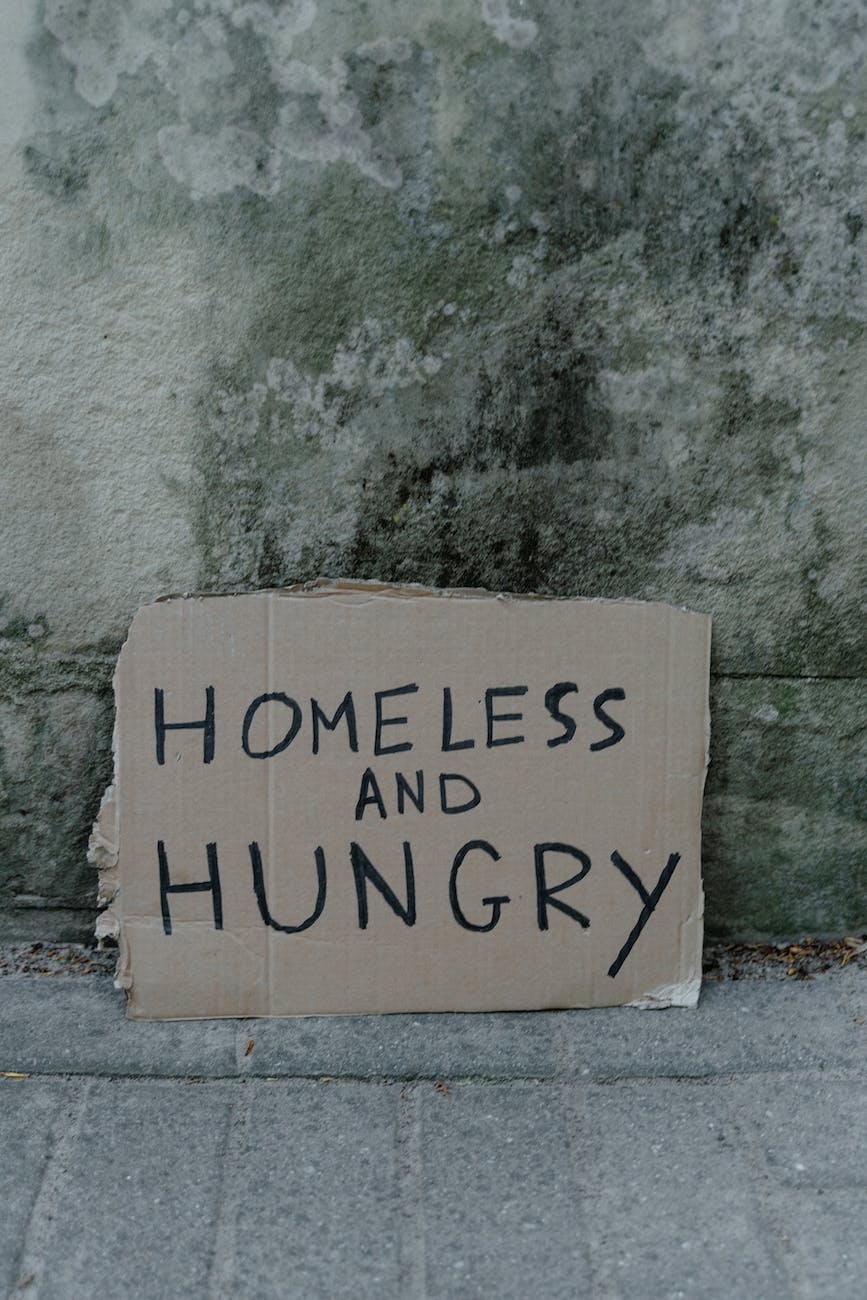
Confession: Recently, I got into it online over homeless camps in my hometown.

Person A: Those camps are an eyesore. When is the city going to do something?

Me (drawing on past conversations on the same topic): The thing is, everyone has to sleep SOMEWHERE. But people say “not on public land, and not on vacant private property either, and don’t you DARE build a shelter for them because that will just encourage more of them to come!” It’s like people think if we’re mean enough to them, they’ll just cease to exist.

Person B (paraphrased): These people are lazy freeloaders and the city should not allow them to panhandle at the highway interchanges.

Me: how do you know they’re lazy? Have you talked to them? I’ve been feeling my conscience twinged for years. I’ve started keeping food in the car so I can give them SOMETHING. It’s good for us to look them in the eye and see the face of God, and have our conscience and our privilege tweaked.

Person B: My conscience is not “tweaked” and I have NO PRIVILEGE OTHER THAN I WORK MY BUTT OFF!”

Me (privately): That person has definitely had their conscience and privilege tweaked, or they wouldn’t be that defensive. God, I put this one in your hands now, because I clearly am powerless here.

Person C (in the style of “mic drop”): “Those who will not work, neither should they eat.” 2 Thessalonians.

Me: You can’t take that out of context. What about Matthew 25? Paul was building on the teachings of Jesus, and Jesus never put any such conditions on taking care of people.

Person B: Those people are lazy. They don’t want work, they just want a handout.

Me: Have you offered them work? I haven’t, and I fully recognize my own failures in that. This is why I keep food in the cars for them.

Person B: Well, if that makes your little bleeding heart feel better, go for it.

Me: (unfollows thread.)

It is horrifying, how un-Christian Christians can be. And then how bewildered we all act that people are calling b.s. and leaving Christianity.

In one town, a Catholic city councilperson fought tooth and nail to prevent an ecumenical group from creating a winter warming shelter. They threw obstacle after obstacle in the way.

In another church filled with people who do, in fact, care about social justice, people resisted hosting a similar shelter because they want to feel safe in their church and they wouldn’t feel safe if there were homeless people hanging around.

I am realizing that these failures within the Christian community to live out the Gospel call are not a function of right or left, although I have often thought of them that way. They are a failure of connecting the dots between what we claim to believe and where the rubber meets the road.

For the record, let’s discuss that passage from 2 Thessalonians. Because it came up, first in the Lectionary, and then in its full context in the Bible in a Year.

In the context, Paul was talking about how he had the right to expect people to support him financially while he was among them, but he chose not to do so because he didn’t want to burden them. And so he said, “You within the Christian community, follow our example.”

In other words, he’s talking to people who, according to Acts, were already living in community, sharing all their worldly wealth so that no one went without.

THAT is the context of this verse. It is NOT meant to be used, weapon-like, as a bludgeon against the poor in an economic system where the gap between rich and poor is sinfully wide.

So if you want to use this verse AFTER you’ve folded the homeless population into community, THEN you have the right. Until then, it is abuse of Scripture.

The Unevenness of the Sin of Scandal

A few days ago, the Bible in a Year highlighted Eleazar’s martyrdom in 2 Maccabees. Eleazar was unwilling even to pretend to eat pork because what kind of message would that send to the next generation about God’s law?

Image by Hans via Pixabay

This is the “sin of scandal”— something I’ve heard about my whole life, but in that moment, in the midst of the election cycle where a whole bunch of politicians were courting Christian voters by telling flat out lies about stolen elections, I realized: We, as a Christian community, have a pretty big double standard about what constitutes the sin of scandal.

We’re very cognizant of it where the sin of scandal involves sex.

But there are a lot of other areas where it doesn’t even register, and if I name them, hackles will be raised. As I am sure they were in that second paragraph.

There are other issues, too. Environment, gluttony, and greed, to name a few. The issues I talked about last week.

And as for elections, after January 6, 2021, I wrote to my Senator who claims to be Catholic while loudly and stubbornly proclaiming clear falsehoods about stolen elections.

That is a sin of scandal, too. (And I told him so. Though I doubt his handlers even let him see the note. At least I tried.)

I hadn’t considered the sin of scandal for years, but having it highlighted resonated—and annoyed. Resonated because of course! I know for certain that there are people being driven away from God at this very moment by the sin of scandal in the political realm.

And annoyed, because when people talk about the sin of scandal, I suspect—in fact, in my jadedness I am certain (though I’d love to be humbled and proven wrong, truly)—that they are only thinking about sexual issues, while giving greed and dishonesty and selfishness at the expense of the future of humanity a total pass.

The call here is for us all to better examine our lives and recognize the disconnect between what we BELIEVE (in God terms) and what we believe (in world view terms). We’d all like to think those two are in lock step, but they aren’t. For any of us.

I have thoughts about that, too. I’m sure you’re shocked to hear. 🙂 But I’ll save that for next week.

Should We Quit Having Kids Because Of Climate Change?

Recently I learned that there are people who are struggling with the decision to have children, because of climate change. They’re questioning if the morality of bringing children into what is virtually certain to be a hellscape in the not-too-distant future.

Now, I can hear hackles rising and derisive snorts being uttered all over the place right now, but I would ask you to take a deep breath, say a prayer for discernment, and actually take a moment to consider this. And remember that the person speaking here is a mother of 4 who’s been using NFP for nearly a quarter century.

Consider this:

We in the west are fundamentally and unshakably committed to our own convenience and comfort at the expense of everything else.

In the summertime we make our churches, schools, and hotels so cold, we have to wear coats inside. People write Facebook posts telling us we’re psychotic if we set our thermostat anywhere above 72 in the summer.

Our culture glorifies gluttony—how else can you interpret the clear parallel between “bigger portion size = better” at restaurants?—and then throw away shameful amounts of food while huge swaths of the world are starving.

People leave cars running while they stand at the door talking, or while kids are at soccer, or while waiting for half an hour in school pickup line, or while scrolling phones. (That one baffles me. You’re literally burning money!)

These and a thousand other things we do thoughtlessly, habitually, without intention and without examination. Even after it’s pointed out that our habits of consumption and comfort are damaging God’s creation. Even when we see daily the proof of climate change, and that it’s the poor who suffer first and most. Even when the scientific community is begging us to fix it, and telling us how. Even when the world is literally burning around us—even in places where fires aren’t supposed to be a part of our climate.

As Catholics, we believe children are always and unequivocally a blessing, the crowning of marriage.

But honestly, when I heard that some are choosing not to have children because of the world they will have to survive, I thought, “There’s some sound moral reasoning going on there.” I can’t embrace it, but I understand it.

As Catholics, we can and should advocate for the goodness and dignity of human life, and the worth of having children, even though they will suffer in this world. Because of course, life will always involve suffering.

But if we are flippant, derisive, or dismissive about climate change—if we, collectively, act as if our selfish commitment to comfort and convenience has no long-term ramifications—then we have no business judging people who discern against having children. We’ve created the situation they’re responding to. And God will call us on our sins as much as he will call them on theirs.

Background Image by Kevin Ellis from Pixabay

Both/and

I think I’ve finally figured something out.

At the beginning of this year, I committed to wrestling how to balance Godly anger (i.e., Jesus-and-the-money-changers) with detachment. I do not see how these coexist.

I spent a whole heck of a lot of time this summer pulling crabgrass and driving while listening to Fr. Richard Rohr’s 1993 (1992?) reflections on the Sermon on the Mount. This set of talks was mind blowing on several levels, but the thing that has really crystallized in recent weeks is this:

There are things that are genuinely, and permanently, and irreconcilably, in conflict with each other. And yet they are both 100% true, both of God.

For instance: we are called to rage at injustice in the world, to be angry with what makes God angry, to mourn what breaks God’s heart—to agitate and advocate for the Kingdom on earth—the thing we, incidentally, pray for every danged time we pray the Lord’s prayer. Jesus absolutely excoriated people who didn’t make their religious beliefs concrete. Matt. 25 and the cleansing of the temple are good examples, of course, but also think of Jesus ripping into the Pharisees for tying up heavy burdens, heavy to lift, and raising no finger to help. Clearly, to Jesus, the things of the world MATTER. Religion is totally bogus if it’s only in the head and heart. It must be lived, concretely, in the real world. (That’s the whole point of the Theology of the Body.)

Yet we are also called to remember that the only way to really follow Jesus is to bow out of the worldly system altogether. Jesus’ whole thing about the tax and Caesar was meant to say, “Quit freaking out about questions of taxation and authority. It is IRRELEVANT, because you don’t belong to this world. Who cares about the taxes?” No matter what happens here on earth, the end goal is Heaven, so what happens here… doesn’t matter?

It does matter… and it doesn’t.

It is the now-and-not-yet. The both/and.

This is what I have realized in recent weeks. I’m feeling tension because there IS tension. There’s SUPPOSED to be.

Now what do I do with this insight?

To be clear, that’s a rhetorical question. I suspect answering it will take the rest of my life.

A little less talk, a little more action

You know that saying: whenever you point a finger at someone else, four fingers are pointing back at you? (Well, it’s really three, as you can see, but…)

I think about that a lot in the context of Intentional Catholic. Anything I write, integrity forces me to turn back on myself, mirror-like.

I’ve been struggling through the Bible in a Year podcast… valuing it for the sake of hearing Scripture in a way that helps me grasp the historical context, but struggling because sometimes the commentaries really set me off. The one on Matthew 25—which is sort of the whole foundation of Intentional Catholic–pretty much gave permission for people to say “I’m clothing my naked children and feeding my hungry family. I’m covered.” In fairness, I do not believe that’s what he intended to convey, but it certainly does give tacit permission to ignore the plight of ACTUAL poverty and suffering.

Which is not to belittle feeding and clothing a family. I am up to the tips of my frizzy curls in caring for kids. It’s a real thing.

But it doesn’t negate our responsibility to the poor, marginalized, and vulnerable. First of all because keeping our kids fed and clothed is only a sliver of what keeps us so busy. The vast majority of what keeps us hopping is not essential. We could ALL cut back on some of our luxury and busy-ness and refocus some of that energy on the poor, marginalized, and vulnerable.

But as I sat there stewing and fuming over this, it occurred to me that me sitting in my house writing blogs and social media posts is not clothing the naked and feeding the hungry, either.

Here’s the thing. The conventional wisdom is that not everyone is called to everything. We are supposed to find what we, individually, are called to.

But I am an Enneagram 1, which means I’m very concerned with Getting It Right. For myself AND for the larger world. Enneagram 1s are deeply susceptible to scrupulousness. (Scrupulosity?)

The trouble is, when I, as an Enneagram 1, try to parse out what I feel most passionate about, I can’t do it. It all matters!

I have a child with a disability. Our health care system of access & payment is deeply dysfunctional and a burden on families.

My conscience stings every time I see a homeless person at an exit ramp. How dare we drive by, avoiding eye contact to preserve our own comfort? How dare people on my “Nextdoor” app call them “zombies,” as if these are not human beings with the same innate dignity as themselves?

I see the chaos and suffering that causes people in Central America to flee for the U.S.—and the way some people here villainize those who are desperate for the same security we treat as a divine right. How can I not be passionate about refugee and immigration?

I have godchildren and family members whose skin color will make them a target when they grow up. How can I not rail against those who deny systemic racism?

I had infertility that the medical community wanted to treat by slapping bandaids on it (birth control, artificial procedures) while ignoring the problems that caused it. We have a family because an NFP doctor took the time to find the root cause (PCO + agricultural chemicals in the water—how can I not be passionate about the environment?). So when I see how abortion is the symptom of a host of other problems that are systemic in our culture, how can I fail to rage at those who want to address the symptom while ignoring the causes?

I don’t know what my “one” issue is, because dang it, they’re all equally important. Thank you very much, Enneagram 1. But I can’t do everything. For years, I’ve been trying to learn to respect my limits, to create healthy boundaries.

But sooner or later you have to say “yes,” too.

So for now, I am working a shift at the Food Bank into my schedule, and exploring volunteer possibilities with Refugee and Immigration Services. Because at least there’s a known entry point there.

I am not going to stop talking. But I’m going to start mixing more action in with it.