It’s not about what we say

Background Image by Soorelis from Pixabay

It seems like everyone these days is focused on “what do we say to the ‘none’s?” and “How do we talk about Jesus?”

I can’t help feeling that those are the wrong questions. Pope Francis’ contention in Evangelii Gaudium is that when we’re filled with the Gospel, it’ll overflow from us automatically.

These days, I’m becoming more and more convinced that simply living the Gospel authentically, holistically, and with joy is the simple, yet difficult part of evangelization that we have to master first. For better or for worse, the world sees an image of God in us–in our words, in our actions, and in the way we approach everyday situations and hot button issues. If the image we present is beautiful and inviting, we don’t have to say anything at all. If it’s off-putting, nothing we say will make any difference anyway.

Divine Creativity

Background Image by David Mark from Pixabay

There’s no doubt the Church is going through a period of darkness and ecclesial weakness right now. Many have left the Church and plenty of the rest of us have been shaken. This is such a beautiful reminder for this time and place. Come, Lord Jesus! Come, Holy Spirit!

How We Talk About Abortion, Part 2

Photo by Maria Oswalt on Unsplash

In my post yesterday, I talked about the need to speak with love and listen to those who stand on the opposite side of the abortion issue. I also suggested we should be doing much more than pursuing a legal end to abortion.

Today I’d like to explore that second part in more depth. Because recently, I’ve heard prolifers say that they shouldn’t be criticized for focusing solely on the legality of abortion.

In many ways, that’s a great video, and I encourage everyone to watch it, in part because it shows that there’s much more commonality between pro-life and pro-choice than we think.

But at the same time, I think it’s incredibly shortsighted to focus so narrowly on legality. I would argue that what she describes is not, in fact, pro-life; it is what the pro-life movement is always criticized for being: anti-abortion.

It’s not enough to be anti-abortion, or even anti-abortion, anti-death penalty, anti-stem cell research, anti-euthanasia. If we want to be pro-life, we should be FOR things. We should be actively, publicly advocating for conditions and institutions that support the ability to choose life.

This means recognizing, admitting, and working to replace societal norms and attitudes that enable the divide between rich and poor, between socioeconomic classes. It means advocating for family-friendly policies surrounding working conditions. It means advocating for a health care system that offers equal access. It means working to equalize educational quality. Because all of those things are pressures that lead to abortion.

We need to recognize that the vast majority of these problems, the ones that cause women to feel they have to gnaw their legs off, as the article said, are too big to be dealt with by individual charitable giving. No matter how personally generous we are, we will barely make a dent in the injustices present in the world.

(Did we naturally desegregate through grassroots efforts to change hearts? Did we end slavery that way? No. Not even close.)

That doesn’t means we shouldn’t give charitably—we should.

But we also have to recognize the need for centralized, i.e. governmental, intervention—yes, even if it means expanding programs and higher taxes. Yes, there are potential pitfalls and complex problems to work out to make it happen in a moral way. Yes, it would be simpler if we could leave the government out of it. But a) we already accept the need to have the government involved—we’re working to change the federal law, aren’t we? And b), small government is not actually anywhere on Jesus’ list of characteristics of the Kingdom of God.

Finally, I want to reiterate the primary point of yesterday’s post: we have to STOP using the “abortion is murder” language. It inflames the discussion, and besides, we’re talking out of both sides of our mouths. We talk about compassion for women in crisis situations, and then we turn around and call them murderers? Really?

Those words hit the other side of this issue—and women in crisis—as fire and brimstone judgment. It’s no wonder the other side throws up impenetrable defenses. We call them baby killers, for Heaven’s sake! When we use language like that, we are the ones closing off discussion and putting barriers in the way of conversion.

That is not how God deals with us. He invites us, he brings us along slowly, he speaks to us where we are and gets us, eventually, to where he knows we need to be.

We’ll never do this perfectly, but that should be our goal.

How We Talk About Abortion

I doubt anyone reading this would argue with me when I say abortion is the central, pivotal issue at the heart of the divide in America today. In recent weeks, with different states passing various abortion bans as test strikes against a new Supreme Court, the magma that simmers uneasily beneath all our toxic discourse has erupted.

Current discussions are excruciating for someone like me, who believes we as Christians have too long taken a facile approach to this issue: A child is a child, a life is a life, end of discussion. Any protest issued by the pro-choice movement does not require answer, because it can’t possibly outweigh that central, fundamental tenet.

Well, a life is a life; it’s true. It’s not that the core belief is wrong. But I heard a quote recently. I haven’t been able to verify it, but it resonates as true to what we as Catholics believe about God:

When God sees sin, he sees wounds.

(For what it’s worth, I heard it attributed to Julian of Norwich.)

What I hear, in the hysteria of those who are pro-choice, is pain.

The pain of sexual abuse, assault, and harassment. The pain of discrimination. A thousand pinprick wounds (and plenty of traumatic ones, too). The pain of deep wounds not healed. People who encounter a hardline “life is sacred, and there’s no more to talk about” stance—a stance which fails to address their pain—will experience a further ripping of wounds they might not even recognize they have. Wounds they have no idea how to heal, because the God that could heal them has been too often represented by people who don’t acknowledge their pain, and in some cases are the cause of it. Which means they dig down and become even more entrenched and unable to hear.

We are not changing hearts when we focus our efforts in this way. And if we want to create a culture of life, we have to change hearts.

So how do we change hearts? I’ve been thinking a lot about this lately, and I’ve realized that not one of the moments of conversion in my life ever happened because I was scolded, hammered with a truth I wasn’t ready to receive, or told my concerns were irrelevant. It always happened slowly, organically, through insights that grew from truths I already recognized.

If we want to change hearts, we have to learn to speak in such a way that the people who need to hear the message are actually able to receive it.

If we who believe in the sanctity of life can only answer the sincere, heartfelt anguish of people who are pro-choice with a “mic drop” argument that means nothing to them (no matter how true it is), then we are tone deaf. We are noisy gongs, clanging. We are without love.

So the next question is: what pain, what concerns, of the pro-choice movement are we ignoring, to the detriment of our goal of creating a culture of life?

My spiritual director once said that the intersection of faith and politics is a mess, because it’s like a bowl of spaghetti. Tug on one thread/issue and you dislodge dozens of others. Abortion simmers beneath everything else because it’s connected to almost everything.

An author in the National Review recently wrote that something she wrote years ago has been quoted both pro-choice and pro-life writers: “No one wants an abortion as she wants an ice cream cone or a Porsche. She wants an abortion as an animal, caught in a trap, wants to gnaw off its own leg.”

This resonates with both sides because it’s true. Women really don’t go around looking for excuses to kill their children. They seek abortion because they truly feel they have no other choice.

Now why would that be?

It can be because they’re in abusive relationships, and they simply feel they’re not capable of bearing one more burden. Or because they are in poverty, and can’t bear one more burden. And yes, a child is a burden. A joyful burden, we hope, but a burden nonetheless. We all complain about parenthood too much to pretend otherwise.

It can be because health care (before and after ACA) is astronomically expensive and handled by private companies in a callous and punitive manner, in which profit counts more than the good of the customer.

It can be because mothers know the system is stacked against them. If they don’t have a support network, how can they care for a child and also work?

It can be because schools in poor areas are a pale shadow of what more affluent families (i.e., us) demand as a given. Or because discrimination still exists, in ways we can’t fathom, because we won’t accept the word of those who experience it, preferring to think they’re overreacting.

The upshot is that women seeking abortion feel—with reason—that they are simply birthing a child into a desperate life of discrimination and struggle and pain.

And again, we know any life is better than no life. But is that facile response going to cut it when we face God? I can’t help thinking God’s going to say, “Thank you for working so hard to protect the unborn ‘least of these,’ but what did you do for all those OTHER ‘least of these’?”

The upshot is: it’s not that we’re wrong to say the baby’s right to life outweighs all other concerns. Of course it does.

But that doesn’t erase the need to address all those other concerns. And my entire life, the prolife movement has been singlemindedly focused on the legal question of abortion, while actively working against attempts to address these other issues at the level of society.

I have more to say about this, but this post is too long already, so I’ll close for today and pick up again tomorrow.

Note: Part 2 is here, and is significantly shorter!
Racism is a prolife issue

Open Wide - prolife

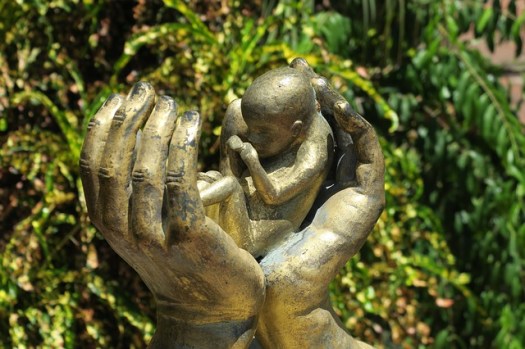
This quote may seem shocking, but it speaks to the larger prolife issue. To be truly pro-life, we have to be thinking beyond the legality of abortion; we need to think about the larger issues that exert societal pressures. Why is the abortion rate so much higher among black women, do you think?

I have a lot of thoughts on the current state of the debates around abortion, but I will leave this for now and hope that it encourages many to click through and read the whole pastoral letter.

Encountering others

Open Wide - peripheries

In my upcoming book on living the Beatitudes in this day and age, in this place and time, I talk at one point about the risk of living in a bubble. We worry about perceived “bad influences” and thus cut off exposure to people whose experiences are different than ours. This can be true around religion, around politics, but it’s especially noticeable with race. How many of us actually have friends, by which I mean people we hang out with on a regular basis, of a different color skin?


My New Book

Yesterday, my teenage son’s friend asked me, “So…do you actually do anything, like, for a living?”

I thought: “It’s a good thing I have a sense of humor!”

I’ve said for years that doing religious writing is like living an examination of conscience…every moment, all day long. Every time I sit down at the computer to work—every time I take a walk to brainstorm—matters of the faith are on my mind. My Google history is heavy on Catholic and Scriptural searches. I turn to the Holy Spirit again and again throughout the day, asking, “Teach me how to respond to this problem/need/online comment.” Or “I can’t figure out this plotting or structural problem. Help?” Or, “What about this, Holy Spirit? Am I wrong? If I’m wrong, please show me.”

So when Our Sunday Visitor approached me about writing an examination of conscience based on the Beatitudes, it seemed like the natural and inevitable end of what I’ve been doing for years.

The Beatitudes, part of OSV’s Companions in Faith series, is not a standard examination of conscience, with a thousand questions that cause your brain shut down. (I’m not the only one who reacts to traditional examinations of conscience this way, am I?)

I wanted to invite readers to journey into what it means to live these “blessed attitudes” in a real-life, workaday world. How do—or should—these simple statements ripple out into our practical lives?

This short booklet represents the best distillation of what I mean when I say “living the Catholic faith intentionally in the real world.” It dives deeply into challenging topics. What “things of the world” are most tempting to me? In what areas of my life do I cling to control, refusing God access? What does it mean to be a peacemaker in this world of bitter division? And so on.

Writing this booklet also challenged me deeply: to discern my own biases and speak past them. To find words that can resonate with people from across the spectrum of experiences and philosophies, and bring all of us together in what it means to be a Catholic in the real world.

The road to starting Intentional Catholic has been a long one, as I said in my very first post. Spiritual awakening has not been comfortable, but it has enriched my life and made me a better human being—which is to say, a better image of God in the world. I’ve heard it said that the mark of conversion is the desire to help others experience what you’ve experienced. That’s certainly been the case with me. My prayer every day, every time I feel frustrated by some example of what is not Godly in the world, is, “Lord, please help me make a difference.”

The Beatitudes, part of OSV’s Companion’s in Faith series, is now available for preorder. I’ll be on OSV’s webcast on Thursday, June 13th, talking more about the project. I hope you can join us!

Fulfillment of human dignity

EG 9 - dignified and fulfilling - resize

Happy Memorial Day to my U.S. readership! It’s been a crazy May for me, so if I take a hiatus next week, bear with me. I have a lot of catchup to do, and now the kids are out of school–time to get some healthy summer habits set up!

On that topic…Yesterday, some friends and I were chatting about what it takes to get our children to really connect the faith with the real world. There was discussion about whether working at the soup kitchen might be just as effective as formal religious education. Perhaps not a substitute, but definitely food for thought as summer break begins and parents have a little time to breathe, to live intentionally with our families…

If goodness wants to spread, why do I harden my heart to others?

EG 9 - profound liberation.jpg

One of the hardest things about harvesting quotes from Church documents is that, taken out of context, we don’t always appreciate the magnitude of what we’re reading. This quote, for instance, is in the middle of a passage on goodness. Goodness, Pope Francis says, spreads outward by its very nature. What goodness we receive wants to expand out to others.

Is this really how we receive goodness? Do we desire to take what has filled us and spill it over to others? If so, what does that mean for the way we interact with others?

Yesterday morning my son and I took a bike ride along a trail near our house. Along the way we crossed paths with two people, one of whom I think was homeless and the other I’m sure of. I said hello and waved as I do with everyone I encounter on the trails, but where most people respond with “beautiful morning!” or “good morning!” these two men appeared guarded. I got to thinking about how we, the with-homes crowd, react to homeless people. I can list off a series of things I’ve heard or thought myself, and none of them are charitable. All of them focus on the fact that the homeless are an inconvenience, they make us uncomfortable, or they got themselves into their own messes and thus they are Not Our Problem.

These people, who are not beneficiaries of the good things you and I have, have to know that this is how they’re viewed. No wonder they feel a need to be on the defensive whenever they cross paths with us. They’re probably bracing for being reported to the police and kicked out, when they have nowhere to go.

Where is the evidence, in these instances, that goodness desires to spread outward? If we are truly receiving goodness–in other words, if we are cognizant of it, if we are truly grateful for all we have been given–why do we default to judging those less fortunate based on assumptions about their situations? Are we truly free from sin? Because if we are, shouldn’t we be more willing to acknowledge and responsive to–not just individually but as a society–the needs of others?


Joy = Transcendence

Bachelor Buttons_opt
One thing that brings me joy

“We focus too much on fun, and not enough on joy.”

I heard these words from a man receiving an honorary degree at my local university this weekend. And I thought, “Well, God, when you have a lesson you want me to learn, you are not subtle, are you?”

This man, a Methodist pastor, has spent his life practicing the corporal works of mercy, and he’s been amazingly successful at it. So when he uttered that sentiment, my whole weary, under-rested body sat up straight. Because I wanted to know how this man, who insisted that “the world is getting better all the time,” when I see the opposite, defined joy.

He talked about spending a week on a Habitat for Humanity build, and the fun the team had together–but joy, he said? Joy came when, at the end of the week, he saw the reaction of the family as he helped them move in.

Maybe that’s the key to the question, “What is joy?” Maybe joy is in the elevation of ordinary life. Maybe joy is what happens when I go beyond temporal pleasure to a focus on something bigger than myself.

Dance, K grad, etc 009_opt
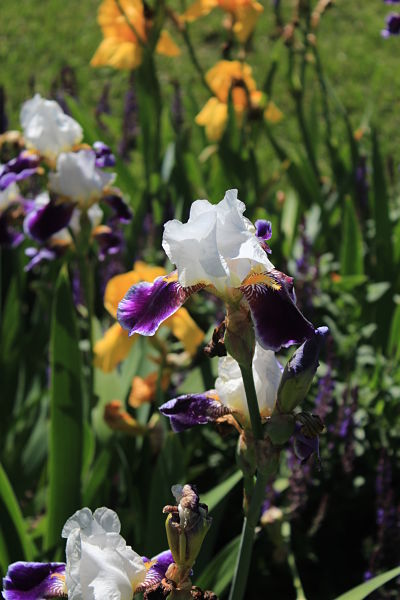
Like flowers. Easy to appreciate at a superficial level, but they are joy to the eye and the soul.

That resonates, doesn’t it? When I think of the moments in my life when I’ve felt what I know to be joy, I go immediately to the feeling of being in a hospital room in the middle of the night with my newborn baby. And all the many beautiful night nursings that followed. I was doing something practical in those moments—something that had to be done; there was no choice in the matter. Yet they didn’t feel like practical moments. They were moments when my soul could see the bigger picture, when I felt connected to God and all the billions of women who had gone before me, and recognized that I was joining a group that was so much bigger than this one mother, nursing a baby in the corner of one room on one night.

So perhaps joy is about transcendence. It is about recognizing the holy in the mundane moments of life: in the way the sun breaks through the clouds, or the smell of wild honeysuckle, or the feel of a little boy’s kiss. Erasing some (not all; that’s too much to expect of mere mortals) of the distraction and logistical brouhaha and simply being more present in my own life.

And as I think about what it would be like to live with transcendence in the everyday situations of life…yes, this could be revolutionary. It really could change everything. For everyone.