Detachment & Forgiveness

Photo by Amine M’Siouri from Pexels

The last year or so, the word “detachment’ has been popping up everywhere. In theory, I totally understand the concept. Detachment means not to be tied to the things of the world.

But what does that look like where the rubber meets the road? I can say with high confidence that I am not addicted to power. That I have zero use for fancy cars and the newest gadgets and the biggest house. (It is never far from my mind that the bigger the house, the bigger the cleaning job. Practicality is a great help in this kind of detachment!)

So I could rest on my laurels and say I’ve got it nailed. Except if that were the case, I have a feeling this word, “Detachment,” would not have been scrolling across my feed so routinely in the last few months.

I have come to realize that where I struggle with detachment is in the passion for justice and seeing God’s will done in tangible, concrete ways on the earth. I get angry a lot. Anger seems to me like a pretty good indicator that one is not “detached.” And the desire for earthly justice is, by definition, a thing of the world.

So here is the question I am pondering these days: how does one balance righteous anger—such as Jesus showed in the Temple, obviously, but also in the blistering critiques he leveled at the religious authorities of his day—with detachment? Righteous anger is what fuels the desire to work for justice. How does one maintain the drive to work for justice while at the same time remaining detached?

A few weeks ago, my good friend Lorraine Hess gave a mission at our parish, and one thing she said really stuck with me. Forgiveness, she said, is choosing not to be controlled by our wounds.

Those words sounded a gong that reverberated in my whole body, and I thought, “THAT’S what detachment is!”

Recognizing it doesn’t mean I have achieved it, though. And now I know that I have stepped onto a new path in my spiritual journey, one that I will be following for some time to come.
Detachment and other wrestlings

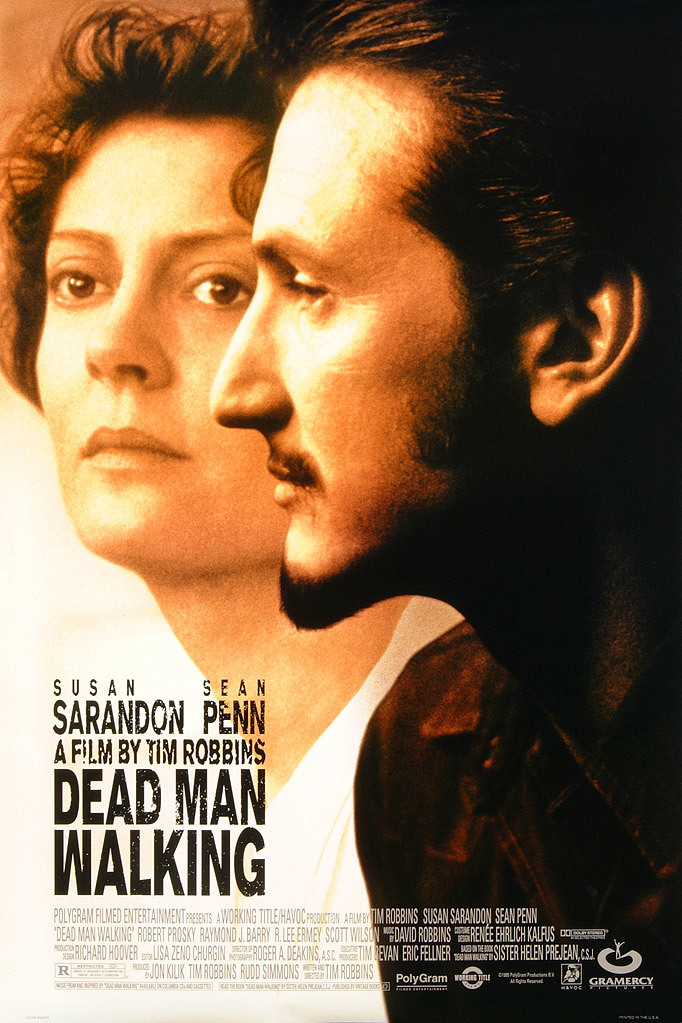
Dead Man Walking (1995) - IMDb

I just finished reading “Dead Man Walking,” by Sister Helen Prejean, tracing how she became involved in the quest to abolish the death penalty. I began it intending to read as quickly as possible, but shortly realized I needed to slow down, to take time to process and sit with it. One of the most powerful things about the book is how well she weaves together her incredibly poignant personal story with the evidence that beat her over the head along the way, forming her in motion.

No doubt many realities she lays out–with exceptional precision and lots and lots of footnotes to primary source material, i.e. court cases (as well as analysis/opinion pieces)–have changed since the book was published in 1993. One that I know has changed is the public perception toward the death penalty. Less than half of Americans now support the death penalty.

And yet many of the realities she points to are still going strong. Public defenders are overworked and for that reason, the poor are those who go to death row. It costs far, far more to litigate, appeal, and re-appeal than it would simply to put a convicted killer in prison for life. And on and on.

I read this book in a time when I continue to struggle with the apparent unchangeability of all that is wrong in the world, and with those who refuse even to acknowledge the problem, let alone sacrifice to do something about it.

Image by John Hain from Pixabay

At the same time, I am encountering the word “detachment” again and again, wrestling with what that means, and how it reconciles with the call to discipleship, which presupposes trying to make the world that better reflection of God’s will that we rattle off in prayer six times in every rosary and once during every Mass and countless other times in ritual and personal piety.

And at the same time, I encountered a podcast interview of Bro. Guy Consolmagno, S.J., who called out the prolife movement for talking about protecting “innocent life” when in fact, as Christians we are called to protect ALL life. It seemed to apply to multiple threads of my spiritual life right now.

I wish I had more answers and fewer questions. Maybe then this Intentional Catholic ministry would have a bit more impact. But then again, intentional has to be authentic above all, and if nothing else, these posts are authentic.