
Freedom, Masks, and Vaccines

Photo by Anna Shvets on Pexels.com

This summer, a good friend and I started a small faith group with our middle- and upper-elementary school kids. We’re using an old morality textbook to get them thinking about their faith in relation to the real world.

Any discussion of morality begins with freedom, and the words of the Catechism on that topic have been rumbling around in my brain ever since we encountered them:

1731: Freedom is the power, rooted in reason and will, to act or not to act, to do this or that, and so to perform deliberate actions on one’s own responsibility. … Human freedom is a force for growth and maturity in truth and goodness; it attains its perfection when directed toward God.

I bold faced that latter part because we tend to focus on the first part and forget that the second is what gives meaning to it. Freedom isn’t meant to be “You’re not the boss of me!” It’s meant to be “I am capable of and free to choose GOOD.”

In other words, if I am addicted to alcohol, or opioids, or video games, or social media, or conspiracy theories, or political disinformation—if I am consumed by fear of socialists, or fear of death—then I am not actually free at all, because those things, rather than my free will, will direct my choices and words and beliefs. The same is true if I am a prisoner of my desires (food, sex, whatever).

Being free is not supposed to be about “you can’t make me.” We’re not toddlers. Freedom is SUPPOSED to be about the ability to choose good (i.e., God).

So much bandwidth is being thrown around these days on the subject of freedom. Of course I’m thinking about vaccines and masking. Some people have genuine obstacles to vaccinating and masking, some more profound, some less so.

But mostly, people are objecting on the basis of “freedom.” I even heard someone on the radio shouting “It’s my body, it’s my choice!” at school board members. An odd, odd juxtaposition, since the demographic of people objecting to vaccines & masks are almost entirely on the pro-life side of the political spectrum, and no prolife person has ever accepted that argument!

I don’t understand pro-life people protesting masks. The entire objection seems, to me, to rest upon the first part of the definition of freedom while ignoring the reason freedom is important at all—the ability to choose the good of all. “You can’t make me! It’s my body! This is a violation of my liberty!” These are worldy arguments, based on one’s self-interest. Where is God in those protests? Nowhere I can see. All I see is, “I don’t want to, so I shouldn’t have to.” If this is what liberty and freedom have come to mean in America, God help us all.

Of course, we likely wouldn’t need to mask anymore if people had just gotten vaccinated in the first place. But lots of people who oppose masking also oppose vaccines, and are using the same arguments, while adding objections based on poor information. mRNA as a vaccine technique did use embryonic stem cells to test whether it was even a viable idea. But that’s it. Working on a COVID vaccine there’s been zero connection to abortion.

Moreover, I read a BBC report in 2019—pre-pandemic, just to emphasize that this is a long-standing question—that talked about a whole host of scientific and medical advances we take for granted that were developed using morally bankrupt techniques. Why are all those okay, and this one is so offensive that we’re willing to let hundreds of thousands of people die over it?

More to the point, the Church has spoken and it’s been consistent from the words and example of our Pope and bishops. Only fringe elements are in conflict.

So I don’t understand the vehement objection among a sizable chunk of people who call themselves prolife. Clearly, people are dying of COVID. Our health care workers are overwhelmed and exhausted. These things cannot be argued away.

Vaccines are GOOD. Masks are GOOD. How can one use faith as a reason to use their “freedom” not to mask and vaccinate?
Face To Face With Homelessness in New Orleans

Photo by Alvin Decena GCASH 09561687117 on Pexels.com

I have been in New Orleans for the past nine days—first on vacation with my family, and now staying on solo for the NPM (National Association of Pastoral Musicians) conference, where I’m presenting this week.

We have so enjoyed our time here—from swamp tours to beignets to fabulous jazz, it was a great trip with the kids. But I was not prepared for the sheer scope of the face of Jesus in the homeless population that I would encounter here.

The presence of people suffering homelessness has been a cattle prod to my conscience for twenty years. I remember going to work at the church and feeling the hypocrisy of driving past the people holding signs as if they weren’t even there—when I was headed to work at a CHURCH. Eventually I started keeping a stash of protein and Nutri Grain bars in the vehicles to pass out. It feels insufficient. But it’s better than refusing to make eye contact at all.

I always think about Lazarus lying at the rich man’s gate, begging for scraps and being ignored. That rich guy probably wasn’t evil. Probably, he just was uncomfortable, didn’t know how to help, and so he didn’t make eye contact.

I also think about Peter and John at the Beautiful Gate, and the beggar there who couldn’t walk. That story stands out to me because it says he asked for alms, and then Peter responded by saying, “Look at me.” Then the Bible says: He paid attention to them, expecting to receive something from them.

The eye contact raises expectations in the person on the receiving end of this equation—and that’s why we don’t do it. That’s why we ignore them. Eye contact compels us to step in in some way. But if we can’t even look in the eyes of Jesus in the person suffering homelessness, then… Well, it says something about our commitment to the faith. Something we probably don’t want to know about ourselves.

So I have made a real effort to make eye contact —to SEE the people who stand at highway intersections back home. After twenty years, I know many faces and some things about them, both positive and negative.

But I was completely and totally unprepared for the magnitude of the homeless population in New Orleans.

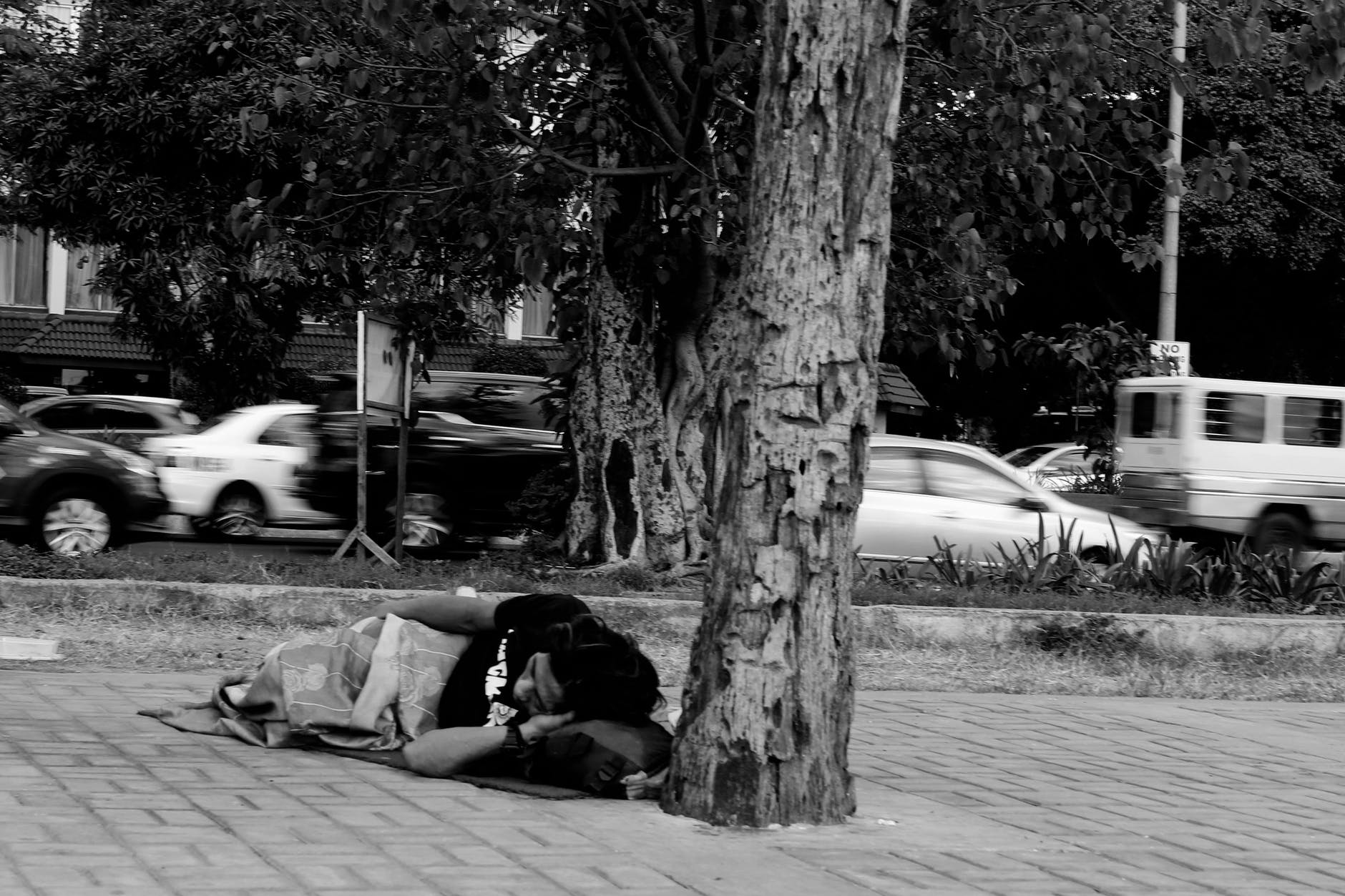
Camps, apparently long-term, beneath the interstates (in the shade—very important). Right out in the open. A man sprawled on the sidewalk sleeping on Canal Street, a handful of steps from restaurants that would cost my family $150 to eat there. Another man using an umbrella to block the sun as he sleeps against a lovely old wrought-iron fence. A woman, her face a study in shame and hopelessness, sitting on a three-hundred-year-old stoop with a sign that says, “First time homeless.” I have seen literally hundreds of homeless people in the week I have been here.

Hundreds of the face of Jesus, looking at me.

The first day, the first HOUR of the first day, I should say, I pulled singles out of my wallet, just to do SOMETHING, knowing perfectly well that if we emptied our wallets, it would only take care of a dozen of these people for a day, maybe two. And yet–and yet! We are on vacation, spending money on ourselves!

Eventually, I had to resort to the very thing I despise: walking by without acknowledging. Food is expensive here, even for me. Do I go buy six orders of beignets and hand them out? Relatively cheap, but totally useless calories. Do I spend a hundred dollars buying $15 burgers and onion rings from the place next to my hotel, and hand those out?

I wish I could offer what Peter and John did in that moment by the Beautiful Gate. They were able to heal that man, give him back the ability to walk—the thing that kept him in poverty, unable to help himself.

What this experience makes so clear to me is that the problem of homelessness is one of the many that are a systemic problem, and so the solution also must be. That does not excuse me from my responsibility to see and to be made uncomfortable and to help in whatever small way I can. (Trail mix bars from the CVS two blocks down?) But it also reminds me that I have to work for justice in the larger world, because the problem isn’t mine to solve alone—it is OUR problem.

Random Reflections

Photo by Adonyi Gu00e1bor on Pexels.com

Bishop Barron’s reflection on today’s Gospel says that “taking up our cross” means more than being willing to suffer. It means absorbing violence and hatred by way of forgiveness and nonviolence.

That sentiment really struck me in light of the last two weekends’ Old Testament readings. I wrestle often with what the “prophet” part of “priest, prophet, king” means in practical terms. What troubles me is that everyone thinks they’re speaking for God, even when they stand on opposite sides of a conflict. Worldly opposition is to be expected, but human nature has a way of interpreting any opposition as persecution, thus confirming one’s own “rightness,” even if that opposition is actually an invitation from the Spirit to recognize that one’s own heart and attitudes and understanding need to grow.

How do we tell the difference?

I pray over this all the time, because it’s hardly fair to point that commentary at someone else without considering how it might apply to me too. But it troubles me how often, how glibly, we say the words “Thy will be done on earth as it is in Heaven,” without realizing the soul-scouring that follows when we actually mean them.

This is all kind of scattered and disorganized, but it hopefully illustrates why Barron’s words struck me so forcefully this morning. I want to see God’s will done on earth, but I can’t change people’s minds; only God can do that, and God won’t force them; they have to be willing to be changed. So that’s two realities I have no control over. All I can do is bear the cross. Absorb the violence and hatred, and meet it with attempts at understanding and compassion rather than outrage.

Help me, God. Because this is way bigger than me.

Gratitude, round 2

The sheer volume of What Must Be Done lately has completely buried me. I am worn down, tired, and frustrated. Summer school is supposed to give the kids structure (so they don’t sit in the house fighting all day) and me time to work and see to my own “oxygen mask,” but it hasn’t worked out that way this summer.

So it’s a good thing for me to be intentional about gratitude—because, left to my own devices, I would only grouse.

I am grateful for:

Sightings of my (secular fiction) book “in the wild”–this one is Rhode Island, but I’ve gotten these shots from Colorado, California, Chicago, Florida, Oklahoma, Michigan, New Jersey, and more. Anxious book mamas can take a deep breath, seeing those shots.
Wine dinner with my husband–what a lovely evening!
Daily giggles from the Daily Buzz my chromosomally-gifted daughter does at school as part of her self-awareness, self-reporting, executive functioning IEP goal.
My patio and back yard. I’d live our here if I could.

Oh yes…and this.

DONE with driving lessons! We have a third licensed driver in the house… FINALLY.
Photo by Kindel Media on Pexels.com

What are you grateful for today?

The more things change…

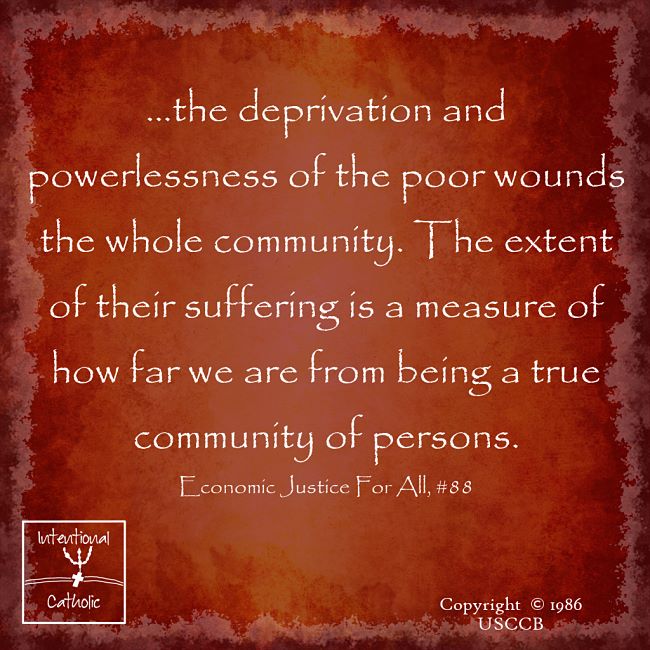
If you notice the copyright on this, it comes from 1986. In the grand scheme of things, I suppose 35 years is not a huge length of time. Nonetheless, it’s been more than a generation, and we’re still bickering about the same things. That feels a little disheartening to me.

The rest of this quote says, “These wounds will be healed only by greater solidarity with the poor and among the poor themselves.” Solidarity is a scary word. A lot of us live in a pretty significant bubble, which allows us to view the problems of others in an abstract way, rather than as something concrete and heartbreaking and intensely personal. Don’t get me wrong, I’m no paragon of virtue in this respect. I’m no better at solidarity than anyone else, despite my best intentions. But it twinges my conscience and forms my approach to the political and social issues that so preoccupy modern discourse.

Freedom and Fraternity

There’s a lot in this section of Fratelli Tutti that should make us squirm in America. In #103, Pope Francis reminds us that freedom and equality are insufficient without dedication to concrete love of neighbor. Without making a political (he does use that word) priority of taking care of each other, liberty is nothing more than “living as we will, completely free to choose to whom or what we will belong, or simply to possess or exploit.” Liberty, as God intends it, is directed toward the welfare of the other.

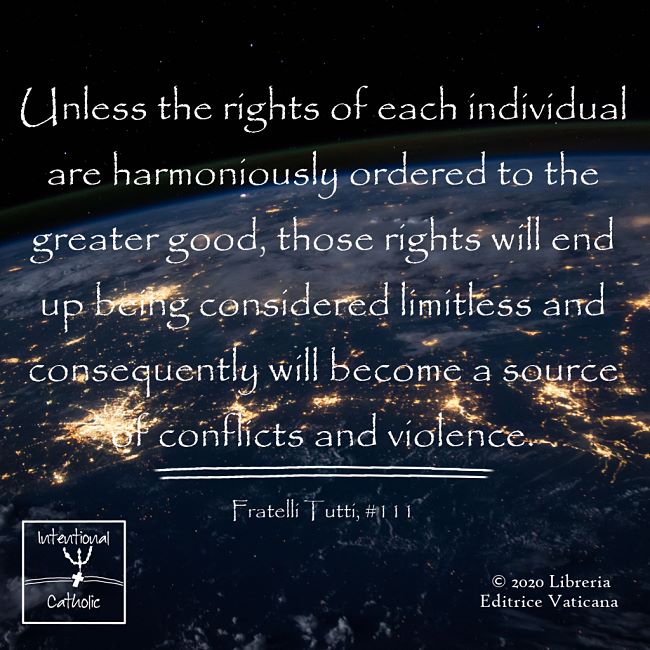
And then, of course, there’s the excerpt above. What follows it is a reminder that efficiency is often at odds with the common good.

In recent years, I’ve become deeply convicted about the fundamental flaw in the whole idea of “pulling yourself up by your bootstraps.” #109 addresses this. Plenty of us don’t, in fact, need help from a “proactive state,” because we’ve been born into functional educational systems and families that can get us to the doctor.

We all stand on the backs of our parents, grandparents, teachers and communities. Within our communities, we support each other; this is good. It WORKS. I certainly didn’t need any of those COVID stimulus checks, and how to use them in a way that best served the common good was a matter of no small debate in our household.

But it’s a mistake, and I would argue, contrary to Christian discipleship, to assume that simply because many of us don’t have need for a proactive state means nobody does. Look at the injustices and inequalities that litter America’s history:

These are just a few structural realities whose consequences have rippled down through history. If we stand on the shoulders of those who came before us, then some among us are fighting a way, way bigger battle than others.

These are hard realities to accept in a time of such profound division. But the Cross IS hard, and the Holy Spirit gave us a shepherd at this time who’s calling us to confront the things that make us uncomfortable.

The Face Palm

My small faith group discussed the Gospel of Mark last week. It was the first time I’ve tried reading a Gospel as a unit, rather than a chapter at a time, or more likely, whatever is in the Lectionary.

A few things struck me. One was that I really understood for the first time the term “itinerant preacher.” Jesus was all over the place. He arrived on one shore of the lake to be greeted by a demoniac, and as soon as he sent the demons into the swine herd, the residents said, “Thanks but no thanks, can you just go away?”

Another thing that stuck out was the “Messianic secret.” I know that’s a thing, but reading the whole Gospel at once, I thought all those times he told people not to tell others what he’d done, he might actually have been less concerned about theology and more with very human exhaustion! He was mobbed all.the.time. He couldn’t get away from people. It must have been suffocating—crowds all the time, wherever he went. No privacy, no recovery time. It gives this introvert heart palpitations.

But my favorite insight came from one of my friends, who really clued in on this phrase from Mark: “He sighed from the depths of his spirit.” (Mark 8:12) She said, “It’s like being a parent. The kid comes and asks this thing AGAIN, and you’re like, ‘How many times do we have to go over this? How do you still not get it?’”

For the past five days, she and I have been sharing various Kid Moments that caused us to “sigh from the depths of our spirit.” It’s a running joke that I’m sure all parents can appreciate, but it resonates at a more serious level, too. There’s something bone-wearying about parenthood at times. Sometimes, you laugh at things because the other alternative is to weep. You look at the thing your kid has said or done and you think, “I have failed as a parent.” And it’s far too late to go back and correct the thing you know you did X years ago to cause it.

It’s been an enlightening experience, reading Mark as a whole. The Gospels are so sparse—so many details missing—and we hear them so often that it all sort of fades into “yada yada yada.” This exercise made it possible for me to see around the edges and glimpse a hazy, indistinct, yet concrete *realness that makes it all seem more… well, MORE. I don’t think I will ever hear Jesus, in any Gospel, rail on the blindness of the Pharisees or disciples without instantly recognizing the emotion he’s expressing.

Henceforth, in my spiritual life, this will be known as “The Face Palm.”

In Pursuit of a Thankful Spirit

Years ago I used to participate in a blog hop where bloggers, mostly women of faith, listed their blessings weekly, counting toward a thousand. It was a good spiritual exercise, but it was never great blogging–for me, anyway. You have to have a pretty strong charism for pairing words and images to make such a thing interesting to readers, and I never had the knack.

But gratitude is a much under-exercised muscle, and every so often, when my world starts circling the drain, I need a reset in gratitude. Such has been my reality lately.

So as I grind back into gear here at Intentional Catholic, I am going to devote my Thursdays to making note of what is good and beautiful and holy in my life. And if it doesn’t make much of an impression on the online world, well, that’s okay. This is for my own growth in holiness.

But even so, I invite anyone who comes across this post, whether by blog, Facebook, or Instagram, to take a moment to reset your own heart by highlighting a blessing or two in the comments.

Today, I am grateful for…

Family Bible Study with a good friend and her kids.

A fun and engaging summer school program that keeps the kids occupied and having fun at the same time.

The wisdom of middle age, which allows me to recognize that sometimes relationships can’t be repaired, and removal is necessary for one’s own spiritual and mental health.

Growth in understanding in the most important relationships in my life.

The magic–and I use that term in its holiest, most God-directed sense–of the play of light and dark along the Katy Trail, as the slanting rays of the morning sun pierce the woods in beams of light and set the soft grasses aglow with celestial light.

The iridescence of a blue bunting, racing me along the trail before darting sideways to rest in a tree.

The deep, pervasive stillness of a historic country cemetery–a place to retreat and be still with God, surrounded by buzzing bees and warm breezes.

A nap on a memorial bench beneath the wide, shady branches of a walnut grove.

The tiny fawn, smaller than the gravestones, crossing the lawn of the cemetery, which dropped to its knees and stared at me from behind a tuft of unmown grass and eventually, after deciding I posed no threat, proceeded to sniff and explore the flagpole before darting off with an ungainly, adorable gait.

Growth in trust (however far I still have to go) that no matter how screwed up everything in the world seems, God can use those events to nudge things closer to holiness. That I don’t have to carry the weight of trying to figure out how to fix things that are far too big for me.

Going around and coming around

Background image by arielrobin, via Pixabay

I’ve been absent quite a while from this site. In the past few months I published a novel, which has consumed every bit of time and energy I had and some I didn’t. But it’s time to start easing back into posting here.

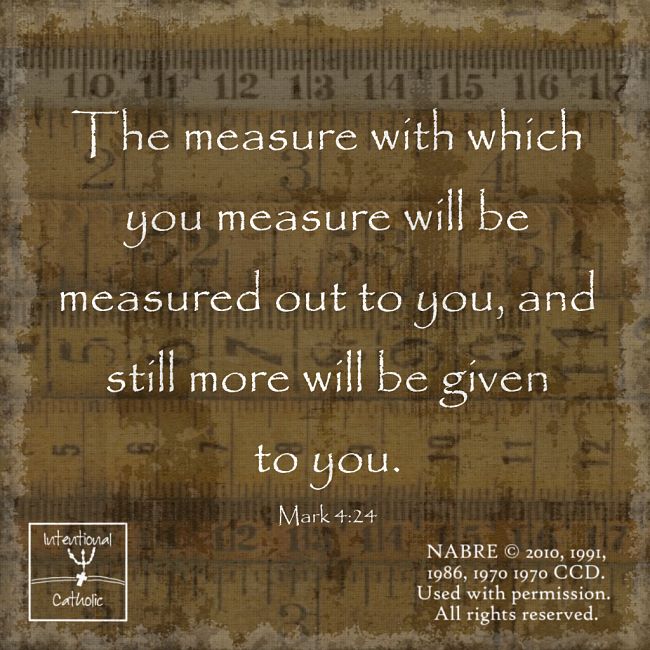
This week, my small group is reading the Gospel of Mark in its entirety, and this verse really stuck out at me last night. It seems to speak eloquently to the times in which we live, as a reminder that what goes around, comes around. I don’t read this as a moral judgment, i.e., “This is how God works,” but instead as a clear-eyed recognition of the way the world works. What we sow, we will also reap, and probably more of it, whether it’s fair or not.

The good news is, it’s true of generosity and kindness as well as judgment and bitter words.