
Our brains prefer a simple lie to a complex truth.
Our brains prefer a confident lie to a hesitant truth.
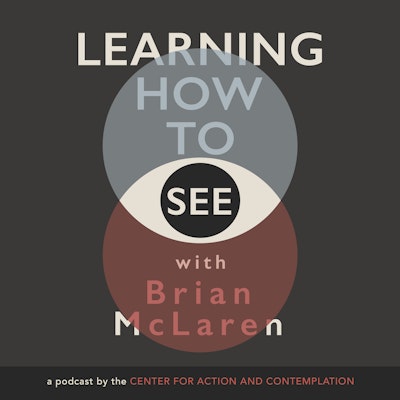
These are two of the biases explored in the “Learning How To See” podcast. Everything I heard on the first season was like an earthquake in my heart, but these two line up so thoroughly with my own experience, it reaches a whole other plane.
There are so many times when my kids ask a faith question, and I can think of a glib answer that will take three seconds and wholly misrepresent the complexity and the gravity of the issue at hand. But to do so would be to ignore the reality of the situation. More to the point, it would ignore the dignity of the soul that’s seeking authentic truth. Truth that stands up to their lived reality, which is, let’s face it, complex. Because it’s a complex world.
So I reply with complexity and hesitancy. I pause–to choose my words, to pray and think.
Believe it or not, this is me on Intentional Catholic, too. I know I come across loud and opinionated, and I am. But a lot of thought and inner wrestling goes into these posts. A lot of care for how the things I say will feel when read by different people.
Complexity bias, confidence bias. These two have played out so many times in the years I’ve been involved in discussions (and arguments) online. Through blogging, too. One memorable time, I waded into current events with unshakable certainty and ended up with egg on my face. It taught me to value caution and deliberation. Research before reacting. Well. Reacting in words, at least. Reacting in my heart is a whole different matter. I spend a lot of time talking myself down from initial reactions. But the point is, I do it.
The absolute confidence with which some people of faith respond to complex situations, erasing all complexities and nuance, waters down the Gospel. If people feel that the Gospel can’t address complexity, of course they’re going to dismiss it. It doesn’t help them process their own experiences. That’s not a weakness in the Gospel. It’s a weakness in those of us trying to spread it.
It is in our nature to prefer the simple lie, told confidently (stolen elections, anyone?), but I pray that we can all learn to recognize how much damage it does to be satisfied to wallow in the blindness of those biases.
(And if it’s at all unclear, that prayer is for myself, too.)
 Intentional Catholic