I love Thomas Merton, and when this landed in my email yesterday via the Center for Contemplation and Action, I thought, “Yes–yes–this!” (And then I thought, “I need to make time to read some Merton…”)
It is a holy thing to acknowledge publicly those who came before us, and how they have influenced us. That’s the reason for Mother’s and Father’s Day, for one thing. And why we have acknowledgments pages in books. And a host of other things. There’s something built into our souls that wants to draw the connection points, to express gratitude. There’s also something cathartic about telling the stories of bad influences–traumas and abuses that had just as profound an impact as the positive ones. By processing the things that made us who we are, we better understand ourselves. And self-understanding feeds growth in holiness, because self-delusional holiness is how we get hypocrisy in religion.
Given how universal this compulsion to connect our present to our past, I’m often puzzled (and frustrated) that so many people remain attached to that American false god, “rugged individualism.” It’s so clear that no one has ever stood on his or her own or pulled one’s self up by his or her own bootstraps. For better or for worse, we are what those who came before made us–woven in with our own choices, to be sure. But always dependent on those who nurtured us and gave us our start in life, out of love and generosity. And also dependent on those who wounded us. And on the structures that shape our culture and society. We stand on the shoulders of others. Always. We know this is true at an individual level. And if there, then also at the societal and global level, too.
My husband and I taught natural family planning for sixteen years. So often, during that time, people would say, “What’s natural about resisting the body’s impulses?”
I thought a lot about that, and I realized what I was hearing was frustration: a desire to have the best of sex while avoiding the related hassles.
The first time I encountered the Thomas Merton quote I shared last week, it seemed made to tackle the connections among desire, freedom, and consequence. In spinning out the implications, a blog post was born. Most of that post follows today:
******
I’ve come to a realization lately that I think all women, and frankly
all men too, need to come to terms with. For me, it was a long time in
coming, considering how obvious it is.
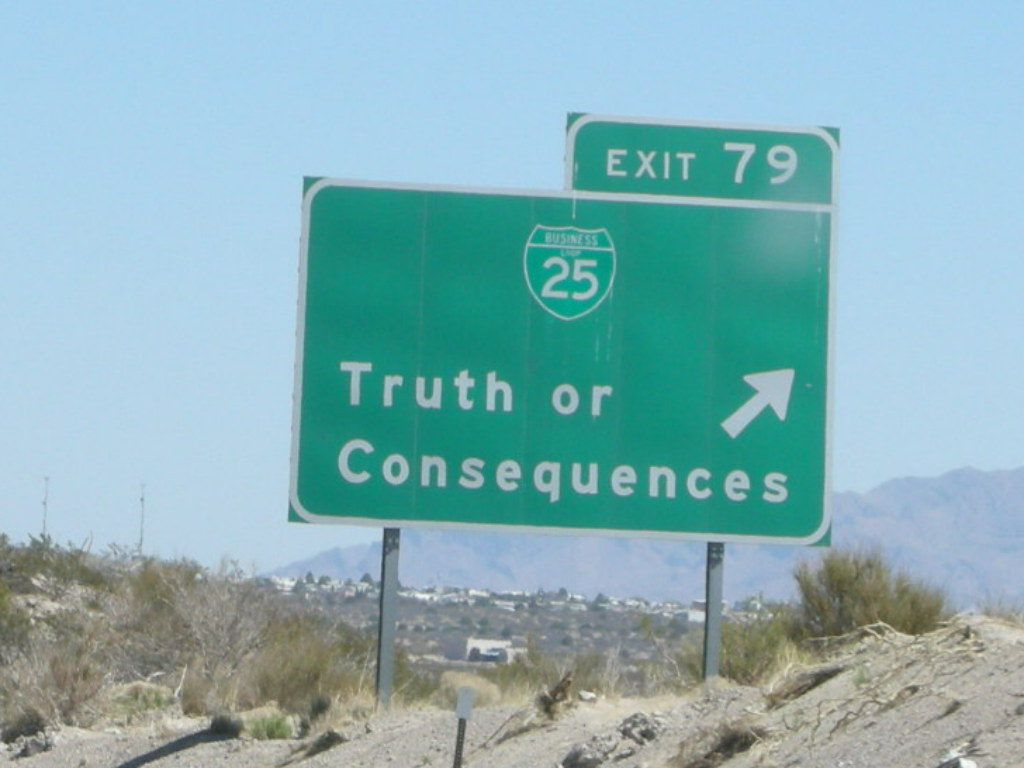
There is no such thing as sex without consequences.
Proponents of natural family planning and proponents of artificial
means of birth control both seem unable to grasp this simple truth. The
NFP community likes to harp on the side effects of birth control and its
potential to damage human relationships. Those who use birth control
deride NFP as ineffective and contrary to human nature because it
requires people to fight their instincts to come together at women’s
most fertile time.
We would all like to think there’s some magic bullet that takes away
the sacrifice and, dare I say it, suffering that is part and parcel of
reproductive life. We want to be able to enjoy the coming together
without the side effects/consequences. There are basically three courses
you can take: you can impose artificial controls on nature
(contraception); you can work with nature (NFP); or you can do whatever
you want and let the chips fall where they may.
Photo by einalem, via Flickr
But every one of those paths has consequences.
If you use natural family planning, you have to deal with occasional
(and for some people, frequent) ambiguity in the signs and the need to
abstain when the woman is most interested in sex. There’s no question
that requires sacrifice and, sometimes, suffering.
If you use chemical contraception, though–assuming it does what it’s
supposed to do, and fools your body into thinking it’s pregnant
already–you’re giving up that increased sex drive altogether. Which is
why I find it puzzling when proponents of birth control criticize NFP
for the abstaining when the sex drive is highest. I mean, it’s not like
contraception solves that issue. And besides, there’s that whole thing
about side effects, and environmental impact, and blood clots. Again: sacrifice, and sometimes, suffering.
Your third option is to let the chips fall where they may. You get
the best of both worlds: sex whenever you feel like it, without side
effects, without increased risk of blood clots. But there’s a natural
consequence to that, too, and it involves bigger cars and bigger houses
and a humongous grocery bill, to say nothing of college costs. And a lot
of time pregnant and breastfeeding and exhausted. So again: sacrifice,
and sometimes, suffering.
The reality is that sex does have consequences, no matter
what you do. You can gnash your teeth all you like, but that’s the
reality. Our job is to make the most responsible choice we can, based on
as much information as we can. And the longer I’m involved with natural family planning,
the more thoroughly convinced I become that NFP, while not without
consequences, is the best option. It’s not the easiest, but it is the
best–for women, for couples, for the world.
It’s been six years since I read Thomas Merton’s “New Seeds of Contemplation,” but the experience remains with me. It resonated so deeply with my experience of finding God in the silence of nature, beyond cell signals and wifi, beyond human noise. So many things stood out to me, but this quote in particular seemed noteworthy, because we think of “freedom” as “I get to do whatever I want to do.” We fail to recognize that self-gratification makes us prisoner within a set of chains far more inescapable than the strictures we rail against.
Here’s the larger quote:
It should be accepted as a most elementary human and moral truth that no man can live a fully sane and decent life unless he is able to say “no” on occasion to his natural bodily appetites. No man who simply eats and drinks whenever he feels like eating and drinking, who smokes whenever he feels the urge to light a cigarette, who gratifies his curiosity and sensuality whenever they are stimulated, can consider himself a free person. He has renounced his spiritual freedom and become the servant of bodily impulse. Therefore his mind and will are not fully his own. They are under the power of his appetites.



 Intentional Catholic