Bearing Fruit
Real Faith for a Real World

Until I started reading Evangelii Gaudium last fall, I had never thought much about the relationship between joy and faith. The very beginning of this apostolic exhortation consists of a list of very familiar Scripture quotes that I never before thought of in terms of joy.
Simple, childlike joy: if we want to evangelize, Pope Francis said, we do it by showing that our faith in Jesus Christ gives us joy.

I have to admit, “joy” is not the vibe I get off most of the people who make a big Thing out their Christian faith. Some…yes. But a precious few.
More to the point, it’s definitely not been the vibe I sensed from myself. I want to see the world as God sees it—yes, there’s beauty, but there is also so much that is not as it should be. How can I help being grieved by what grieves the heart of God?
For years, faith has reminded me of Jacob wrestling with God/the angel. What is the point of faith, after all? Isn’t it to challenge us to become better than we would be without it? If the point of faith is to pat us on the head and tell us how we’re saved and forgiven and we’re blessed in temporal terms because we’re saved—well, I would submit that what we’re actually worshiping isn’t God at all, but our own comfort.
But where does that leave “joy”?
Yesterday morning, singing James Moore’s “Taste & See,” a line leaped off the page:
“From all my troubles I was set free.”
The psalms encompass the breadth of human emotional experience. I know this. But this is Psalm 34. There are more than a hundred more psalms after this one. There is no way that David never had more troubles after writing this song.
Which means…what?
Maybe being set free from troubles just means those troubles don’t rule you. You still have to walk through the dark valleys, but you don’t have to let them define you. They don’t have to define your identity.
So maybe it’s okay to be angry with the things I see happening in the world. But I don’t have to internalize it, dwell on it, and lie awake fretting about it. (Or what people think of me for calling it out, for that matter.)
And maybe it means that I can advocate for the will of God in the world, as best I can discern it, but I don’t have to be crushed when the inevitable setbacks come. I can default to joy, even though things aren’t as they should be.
That would be freedom, indeed.

It seems like everyone these days is focused on “what do we say to the ‘none’s?” and “How do we talk about Jesus?”
I can’t help feeling that those are the wrong questions. Pope Francis’ contention in Evangelii Gaudium is that when we’re filled with the Gospel, it’ll overflow from us automatically.
These days, I’m becoming more and more convinced that simply living the Gospel authentically, holistically, and with joy is the simple, yet difficult part of evangelization that we have to master first. For better or for worse, the world sees an image of God in us–in our words, in our actions, and in the way we approach everyday situations and hot button issues. If the image we present is beautiful and inviting, we don’t have to say anything at all. If it’s off-putting, nothing we say will make any difference anyway.

There’s no doubt the Church is going through a period of darkness and ecclesial weakness right now. Many have left the Church and plenty of the rest of us have been shaken. This is such a beautiful reminder for this time and place. Come, Lord Jesus! Come, Holy Spirit!

Happy Memorial Day to my U.S. readership! It’s been a crazy May for me, so if I take a hiatus next week, bear with me. I have a lot of catchup to do, and now the kids are out of school–time to get some healthy summer habits set up!
On that topic…Yesterday, some friends and I were chatting about what it takes to get our children to really connect the faith with the real world. There was discussion about whether working at the soup kitchen might be just as effective as formal religious education. Perhaps not a substitute, but definitely food for thought as summer break begins and parents have a little time to breathe, to live intentionally with our families…
One of the hardest things about harvesting quotes from Church documents is that, taken out of context, we don’t always appreciate the magnitude of what we’re reading. This quote, for instance, is in the middle of a passage on goodness. Goodness, Pope Francis says, spreads outward by its very nature. What goodness we receive wants to expand out to others.
Is this really how we receive goodness? Do we desire to take what has filled us and spill it over to others? If so, what does that mean for the way we interact with others?
Yesterday morning my son and I took a bike ride along a trail near our house. Along the way we crossed paths with two people, one of whom I think was homeless and the other I’m sure of. I said hello and waved as I do with everyone I encounter on the trails, but where most people respond with “beautiful morning!” or “good morning!” these two men appeared guarded. I got to thinking about how we, the with-homes crowd, react to homeless people. I can list off a series of things I’ve heard or thought myself, and none of them are charitable. All of them focus on the fact that the homeless are an inconvenience, they make us uncomfortable, or they got themselves into their own messes and thus they are Not Our Problem.
These people, who are not beneficiaries of the good things you and I have, have to know that this is how they’re viewed. No wonder they feel a need to be on the defensive whenever they cross paths with us. They’re probably bracing for being reported to the police and kicked out, when they have nowhere to go.
Where is the evidence, in these instances, that goodness desires to spread outward? If we are truly receiving goodness–in other words, if we are cognizant of it, if we are truly grateful for all we have been given–why do we default to judging those less fortunate based on assumptions about their situations? Are we truly free from sin? Because if we are, shouldn’t we be more willing to acknowledge and responsive to–not just individually but as a society–the needs of others?

I’ll be happy when…
…I get away from this job.
…I get a literary agent.
…school’s out.
…this stressful life item is over.
…I graduate.
…so-and-so gets his/her life straightened out.
(And so on, and so on.)
They’re all lies, and deep down, we all know that, but we all say them. I’ve been working on this in myself for years.
#joy #evangeliigaudium #intentionalcatholic #humandignity #realfaithrealworld #faithinaction #catholic #theologyofthebody

“We focus too much on fun, and not enough on joy.”
I heard these words from a man receiving an honorary degree at my local university this weekend. And I thought, “Well, God, when you have a lesson you want me to learn, you are not subtle, are you?”
This man, a Methodist pastor, has spent his life practicing the corporal works of mercy, and he’s been amazingly successful at it. So when he uttered that sentiment, my whole weary, under-rested body sat up straight. Because I wanted to know how this man, who insisted that “the world is getting better all the time,” when I see the opposite, defined joy.
He talked about spending a week on a Habitat for Humanity build, and the fun the team had together–but joy, he said? Joy came when, at the end of the week, he saw the reaction of the family as he helped them move in.
Maybe that’s the key to the question, “What is joy?” Maybe joy is in the elevation of ordinary life. Maybe joy is what happens when I go beyond temporal pleasure to a focus on something bigger than myself.
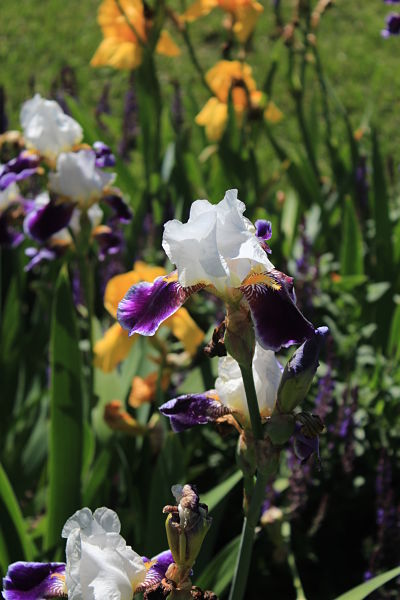
That resonates, doesn’t it? When I think of the moments in my life when I’ve felt what I know to be joy, I go immediately to the feeling of being in a hospital room in the middle of the night with my newborn baby. And all the many beautiful night nursings that followed. I was doing something practical in those moments—something that had to be done; there was no choice in the matter. Yet they didn’t feel like practical moments. They were moments when my soul could see the bigger picture, when I felt connected to God and all the billions of women who had gone before me, and recognized that I was joining a group that was so much bigger than this one mother, nursing a baby in the corner of one room on one night.
So perhaps joy is about transcendence. It is about recognizing the holy in the mundane moments of life: in the way the sun breaks through the clouds, or the smell of wild honeysuckle, or the feel of a little boy’s kiss. Erasing some (not all; that’s too much to expect of mere mortals) of the distraction and logistical brouhaha and simply being more present in my own life.
And as I think about what it would be like to live with transcendence in the everyday situations of life…yes, this could be revolutionary. It really could change everything. For everyone.

The wrestling match between anger and joy remains much on my mind, and this morning I read Ephesians 4: 25-32, which says, “Be angry but do not sin.” And also, “bitterness, fury, anger, shouting, and reviling must be removed from you,” and “be kind to one another.” I believe there is a great deal of meditation to do on these verses, in light of my pursuit of joy.

 Intentional Catholic