How To Detach

I set myself the task of cultivating detachment this year, but the problem is I don’t know how to start.

Last year, I had some path markers to follow through contemplation—people who had a tried & true method I could tap into. Incidentally, centering prayer will be with me the rest of my life. In fact, I’m pretty sure it’s a foundational skill for detachment.

But I don’t have that well-trodden path to follow in cultivating detachment. So the other day I just said a prayer, asking God to put sign posts in my pathway.

God does not disappoint.

Here are several things that have spontaneously crossed my online feeds in recent days. Things I have done nothing to seek out. Maybe they will give you food for thought as they have given me:

#1. a blog post

If you can’t take in anymore, there’s a reason: it’s all too much. What I took from this blog post: Social media, news, everything that’s wrong in the world is important, but we were only built to withstand so much of it. (Language alert.)

#2. … same message.

#3: not a religious article, just a summary of some research that supports the effort.

How To Be Ambivalent. The attitude they are calling ambivalence sounds a lot like what I am seeking: a degree of emotional distance from difficult realities. If it doesn’t matter so much to you, you’re more likely to be able to approach it objectively. That isn’t what they claim to be advocating for, but that’s how it reads to me.

#4: Pope Francis never disappoints, either. I get these “Journey with the Pope” emails every day, I suspect because I donated to Missio.


Complexity and Confidence

Photo by Rahul Pandit on Pexels.com

Our brains prefer a simple lie to a complex truth.
Our brains prefer a confident lie to a hesitant truth.

These are two of the biases explored in the “Learning How To See” podcast. Everything I heard on the first season was like an earthquake in my heart, but these two line up so thoroughly with my own experience, it reaches a whole other plane.

There are so many times when my kids ask a faith question, and I can think of a glib answer that will take three seconds and wholly misrepresent the complexity and the gravity of the issue at hand. But to do so would be to ignore the reality of the situation. More to the point, it would ignore the dignity of the soul that’s seeking authentic truth. Truth that stands up to their lived reality, which is, let’s face it, complex. Because it’s a complex world.

So I reply with complexity and hesitancy. I pause–to choose my words, to pray and think.

Believe it or not, this is me on Intentional Catholic, too. I know I come across loud and opinionated, and I am. But a lot of thought and inner wrestling goes into these posts. A lot of care for how the things I say will feel when read by different people.

Complexity bias, confidence bias. These two have played out so many times in the years I’ve been involved in discussions (and arguments) online. Through blogging, too. One memorable time, I waded into current events with unshakable certainty and ended up with egg on my face. It taught me to value caution and deliberation. Research before reacting. Well. Reacting in words, at least. Reacting in my heart is a whole different matter. I spend a lot of time talking myself down from initial reactions. But the point is, I do it.

The absolute confidence with which some people of faith respond to complex situations, erasing all complexities and nuance, waters down the Gospel. If people feel that the Gospel can’t address complexity, of course they’re going to dismiss it. It doesn’t help them process their own experiences. That’s not a weakness in the Gospel. It’s a weakness in those of us trying to spread it.

It is in our nature to prefer the simple lie, told confidently (stolen elections, anyone?), but I pray that we can all learn to recognize how much damage it does to be satisfied to wallow in the blindness of those biases.

(And if it’s at all unclear, that prayer is for myself, too.)

Detachment & Forgiveness

Photo by Amine M’Siouri from Pexels

The last year or so, the word “detachment’ has been popping up everywhere. In theory, I totally understand the concept. Detachment means not to be tied to the things of the world.

But what does that look like where the rubber meets the road? I can say with high confidence that I am not addicted to power. That I have zero use for fancy cars and the newest gadgets and the biggest house. (It is never far from my mind that the bigger the house, the bigger the cleaning job. Practicality is a great help in this kind of detachment!)

So I could rest on my laurels and say I’ve got it nailed. Except if that were the case, I have a feeling this word, “Detachment,” would not have been scrolling across my feed so routinely in the last few months.

I have come to realize that where I struggle with detachment is in the passion for justice and seeing God’s will done in tangible, concrete ways on the earth. I get angry a lot. Anger seems to me like a pretty good indicator that one is not “detached.” And the desire for earthly justice is, by definition, a thing of the world.

So here is the question I am pondering these days: how does one balance righteous anger—such as Jesus showed in the Temple, obviously, but also in the blistering critiques he leveled at the religious authorities of his day—with detachment? Righteous anger is what fuels the desire to work for justice. How does one maintain the drive to work for justice while at the same time remaining detached?

A few weeks ago, my good friend Lorraine Hess gave a mission at our parish, and one thing she said really stuck with me. Forgiveness, she said, is choosing not to be controlled by our wounds.

Those words sounded a gong that reverberated in my whole body, and I thought, “THAT’S what detachment is!”

Recognizing it doesn’t mean I have achieved it, though. And now I know that I have stepped onto a new path in my spiritual journey, one that I will be following for some time to come.

Thoughts on nonviolence and how it’s organized

A few years ago, when Ferguson, Missouri was all in the news, I remember various people saying to me, “Those people are bringing in outside agitators from other places.” It was a criticism, suggesting that if “outsiders” weren’t riling up the populace, we wouldn’t be having these racial protests at all.

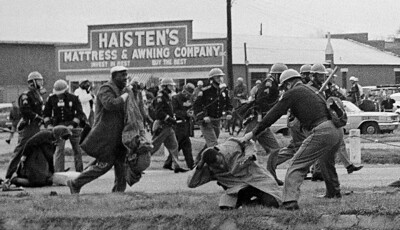
I wasn’t prepared to answer that argument at that time, and I haven’t heard it again since the Black Lives Matter protests swept the country. But as time goes on, I realize that the entire Civil Rights movement was structured the same way: national organizers identifying places where their presence could make a difference, and going there to support the local population.

(What we learn about history really does get distorted—whether it’s a concerted effort, or whether it’s because there’s so much of it and it gets oversimplified in an attempt to boil it down to its most important message, is another question. I’d hazard a guess the answer is “both.”)

In “Dead Man Walking,” Sister Helen Prejean quoted from another book, “Wild Justice,” by Susan Jacoby, which appears now to be out of print. This passage really struck me.

Nonviolence, as employed by Gandhi in India and by King in the American South, might reasonably viewed as a highly disciplined form of aggression. If one defines aggression in the primary dictionary sense of “attack,” nonviolent resistance proved to be the most powerful attack imaginable on the powers King and Gandhi were trying to overturn. … King was even more explicit on this point: the purpose of civil disobedience, he explained many times, was to force the defenders of segregation to commit brutal acts in public and thus arouse the conscience of the world on behalf of those wronged by racism. King and Gandhi did not succeed because they changed the hearts and minds of southern sheriffs and British colonial administrators (although they did, in fact, change some minds) but because they made the price of maintaining control too high for their opponents.”

Susan Jacoby, Wild Justice, pp. 336-337

Every once in a while, someone points out that Jesus’ instruction to turn the other cheek was the polar opposite of passive acceptance of injustice. (Read this for that mind-blowing take on a very familiar passage.)

This passage from Wild Justice also turns on its head the idea of nonviolence as passive. It made me rethink the whole movement. This describes a whole new level of courage: to go in, intending to provoke violence against oneself, which you will consciously not react to, in order to show the violence inherent in the system? Wow. Just… wow.

It was what Jesus did, too. Of course, Jesus’ crucifixion was about salvation beyond the things of the world. But God could have accomplished that any way he liked. The fact that the chosen way to get there was through nonviolent resistance to earthly injustice has to mean something for us.

Rugged Individualism as heresy

I am sharing multiple times from America’s podcast interview with Bro. Guy Consolmagno, because it kept blowing my mind. My last post, in which he pointed out that you can’t have a well formed conscience without FIRST listening to authority, leads naturally into another quote:

“That’s the great American heresy: that we’re all rugged individualists. And the truth is there is nothing we can do that doesn’t affect the people around us.”

HERESY. That’s a strong word.

But it’s so true! We have this (idealized, not terribly accurate) vision of what it means to be American. But who among us has ever stood ruggedly on our own? Not one person I’ve ever met, that’s for sure. We are all standing on the shoulders of parents, grandparents, aunts & uncles, teachers, mentors, etc. People who sheltered us and provided for our needs while we developed the skills we needed to fly the nest.

Even in adulthood, we don’t stand on our own. When we get knocked off our feet (death, hospitalizations, loss of income), our resilience depends in large part on the community around us, who fill our refrigerators, watch our kids, mow our lawns, and pitch in financially. I’ve been on the receiving end more times than I can count—some very recently. And I’m also giving that same support to other members of my extended community—at this very moment.

Being a Christian is the opposite of being a rugged individualist.

But the second part of that quote is the part that brings it all home. Rugged individualism is actually impossible, because everything we do impacts others. Both this quote and the one about conscience & authority were shared in the context of resistance to vaccines and masking. Whatever decisions we make in those areas are not about us alone; they have implications for the life and health of others.

Of course, that’s just the most obvious application. Brother Guy’s words resonate across all the questions that plague us. But if we want to interact with the world as Christians, that truth is important to keep in sight.

Being a Christian is the opposite of being a rugged individualist.

Conscience must first listen to authoirty

A week or two ago I mentioned a podcast I’d listened to. The guest was Brother Guy Consolmagno, the director of the Vatican Observatory, and he was speaking about the intersection of faith and science.

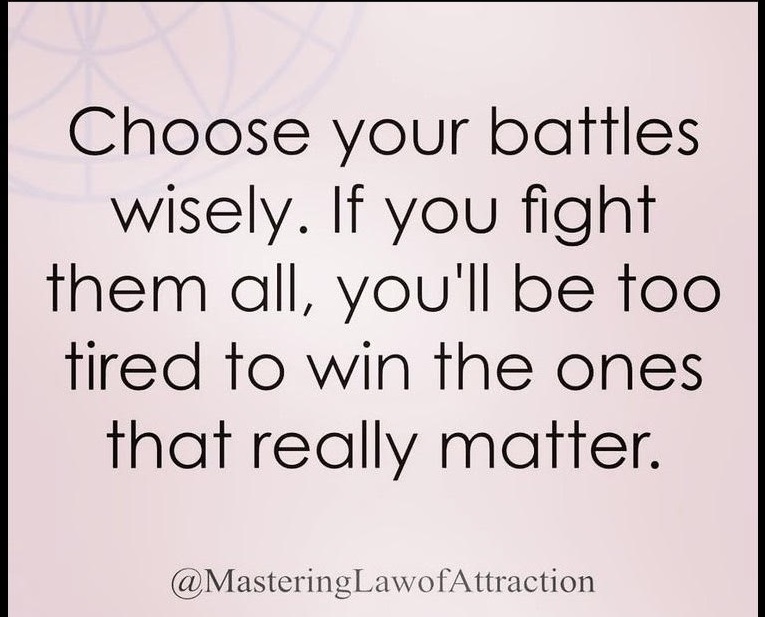
The quote in this graphic blew my mind. Conscience gets thrown around a lot, by people across the spectrum. The question of primacy of conscience is one of the many things I’m pondering at this time in my life. And this quote peeled back half a dozen layers.

“A well formed conscience is one that has listened to authority.”

Boy, if that doesn’t twinge your conscience, I don’t know what will.

Detachment and other wrestlings

Dead Man Walking (1995) - IMDb

I just finished reading “Dead Man Walking,” by Sister Helen Prejean, tracing how she became involved in the quest to abolish the death penalty. I began it intending to read as quickly as possible, but shortly realized I needed to slow down, to take time to process and sit with it. One of the most powerful things about the book is how well she weaves together her incredibly poignant personal story with the evidence that beat her over the head along the way, forming her in motion.

No doubt many realities she lays out–with exceptional precision and lots and lots of footnotes to primary source material, i.e. court cases (as well as analysis/opinion pieces)–have changed since the book was published in 1993. One that I know has changed is the public perception toward the death penalty. Less than half of Americans now support the death penalty.

And yet many of the realities she points to are still going strong. Public defenders are overworked and for that reason, the poor are those who go to death row. It costs far, far more to litigate, appeal, and re-appeal than it would simply to put a convicted killer in prison for life. And on and on.

I read this book in a time when I continue to struggle with the apparent unchangeability of all that is wrong in the world, and with those who refuse even to acknowledge the problem, let alone sacrifice to do something about it.

Image by John Hain from Pixabay

At the same time, I am encountering the word “detachment” again and again, wrestling with what that means, and how it reconciles with the call to discipleship, which presupposes trying to make the world that better reflection of God’s will that we rattle off in prayer six times in every rosary and once during every Mass and countless other times in ritual and personal piety.

And at the same time, I encountered a podcast interview of Bro. Guy Consolmagno, S.J., who called out the prolife movement for talking about protecting “innocent life” when in fact, as Christians we are called to protect ALL life. It seemed to apply to multiple threads of my spiritual life right now.

I wish I had more answers and fewer questions. Maybe then this Intentional Catholic ministry would have a bit more impact. But then again, intentional has to be authentic above all, and if nothing else, these posts are authentic.

A house divided…

I have not been posting much the last few months. I keep chewing over the same baffling questions again and again, and feeling that I am shouting into a void. So I’ve focused my energy instead on my fiction. There’s precious little time in my life for splitting my focus these days, anyway.

But the US bishops’ daily reflection Friday morning was on the topic of division and unity. A house divided cannot stand, Jesus cautioned. If good work is being done, it can’t be of the devil. And if there’s division, it is not of Christ.

The Church is a hot mess of division right now, just as our nation is. Every time I come up against an entrenched position that baffles me, because it is so clearly contrary to my faith, and it’s being held by people who are using their faith as justification for their beliefs, I think of this question of division. I think, “How can this be, when we all claim to believe the same things?”

Spoiler alert: if you’re reading this post in hope of there being an answer at the end, prepare to be disappointed.

Every time I come up against one of these, I think, “There’s no way God could be calling both of these sides to these beliefs. Is there?” Then I pause to search my own conscience and try to see how I could be the one who is wrong. I frequently find that I am wrong in my anger toward, judgment of, and assumptions about people who think differently than me. But I have rarely found the Spirit nudging me that I am, in fact, wrong in my beliefs. Not given the information I have.

So then I go and do research to see if my information could be wrong. I look at the sources, I think, “Nope, not going to read that, it’s too far left and I can’t trust it to be objective. Nope, not going to read that either, because that’s clearly a group with a dog in this fight. There, that’s a moderately-right-leaning source, that should give me a good counterbalance to my own biases.” Occasionally I moderate a position; I think, “this thing people are freaking out about on the left is probably not as big a deal as they’re making it out to be.”

But not often.

It is deeply disturbing to me that so much of our discourse these days is arguing over things that are so easy to disprove. It really isn’t hard to discern between credible sources and conspiracy-theories.

A good friend of mine recently left Facebook, because it was an exercise in scrolling through things that made her angry. “I feel like we’re conditioned to look for the next thing to get angry about,” she said. “I just needed to get away from that.”

How do we seek unity—Christ—instead of division—the devil—when it seems that so many of our conflicts are based, not on reason, but on appeals to all that is sinful within us—our selfishness, our lack of empathy for others?

Gullibility, Misinformation, and the Ninth Commandment

Long ago, I learned that Albert Broccoli, the producer of the original James Bond movies, was a gardener who invented the vegetable broccoli by crossing cauliflower and something else I’ve forgotten.

My reaction was: “Hey, that’s really cool!” I never even questioned it.

Sometime in the last five years, as political misinformation has become so blatant and unscrupulous, I’ve become unshakably committed to fact checking. But for whatever reason, it did not occur to me that my little interesting trivia about broccoli ought to be fact checked. Until one day a couple years ago when I stopped with my mouth open, prepared to share this interesting tidbit, and thought, “Wait a minute… could broccoli possibly really be that new? Hasn’t broccoli been around for hundreds of years? Come to think of it, this sounds an awful lot like a myth/urban legend. Maybe I should check this before I share it again.”

Shocker: broccoli has been around since the SIXTH CENTURY BCE.

I felt pretty stupid.

Then, a few months ago, my third-born came home from a scout campout. “Mom, did you know that daddy longlegs are THE MOST POISONOUS SPIDER OUT THERE? Except they can’t hurt you—“

“—because their mouths are too small to bite humans,” I said. “Yes, I know that.” Then I stopped. “You know what? I’ve heard that my whole life, but now that I think about it, it sounds like bunch of nonsense. Why don’t we look that up?”

Again, shocker: FALSE.

I’m sharing this kind of embarrassing story because it took me years—YEARS—before I recognized the sound of a falsehood masquerading as legit information.

It made me understand—a bit, anyway—how it is that so many good people, intending to follow Jesus, have fallen into the trap of embracing conspiracy theories. Of sharing memes and arguments so distorted, they’re actually lies. Of writing off fact checkers because if they challenge pre-existing certainties, they must, by definition, be biased and thus can be safely dismissed.

I understand… a bit… which is good, because it also still makes me very, very angry. And I need to cultivate compassion, not anger.

So I am sharing this again today, as a reminder to myself as well as anyone who reads this, that truth telling and integrity are fundamental to our faith. Implicit in the use of misinformation is the idea that the end justifies the means. But that’s not Christianity. Integrity matters. Truth matters. Facts matter. Context matters.

Freedom, Masks, and Vaccines

Photo by Anna Shvets on Pexels.com

This summer, a good friend and I started a small faith group with our middle- and upper-elementary school kids. We’re using an old morality textbook to get them thinking about their faith in relation to the real world.

Any discussion of morality begins with freedom, and the words of the Catechism on that topic have been rumbling around in my brain ever since we encountered them:

1731: Freedom is the power, rooted in reason and will, to act or not to act, to do this or that, and so to perform deliberate actions on one’s own responsibility. … Human freedom is a force for growth and maturity in truth and goodness; it attains its perfection when directed toward God.

I bold faced that latter part because we tend to focus on the first part and forget that the second is what gives meaning to it. Freedom isn’t meant to be “You’re not the boss of me!” It’s meant to be “I am capable of and free to choose GOOD.”

In other words, if I am addicted to alcohol, or opioids, or video games, or social media, or conspiracy theories, or political disinformation—if I am consumed by fear of socialists, or fear of death—then I am not actually free at all, because those things, rather than my free will, will direct my choices and words and beliefs. The same is true if I am a prisoner of my desires (food, sex, whatever).

Being free is not supposed to be about “you can’t make me.” We’re not toddlers. Freedom is SUPPOSED to be about the ability to choose good (i.e., God).

So much bandwidth is being thrown around these days on the subject of freedom. Of course I’m thinking about vaccines and masking. Some people have genuine obstacles to vaccinating and masking, some more profound, some less so.

But mostly, people are objecting on the basis of “freedom.” I even heard someone on the radio shouting “It’s my body, it’s my choice!” at school board members. An odd, odd juxtaposition, since the demographic of people objecting to vaccines & masks are almost entirely on the pro-life side of the political spectrum, and no prolife person has ever accepted that argument!

I don’t understand pro-life people protesting masks. The entire objection seems, to me, to rest upon the first part of the definition of freedom while ignoring the reason freedom is important at all—the ability to choose the good of all. “You can’t make me! It’s my body! This is a violation of my liberty!” These are worldy arguments, based on one’s self-interest. Where is God in those protests? Nowhere I can see. All I see is, “I don’t want to, so I shouldn’t have to.” If this is what liberty and freedom have come to mean in America, God help us all.

Of course, we likely wouldn’t need to mask anymore if people had just gotten vaccinated in the first place. But lots of people who oppose masking also oppose vaccines, and are using the same arguments, while adding objections based on poor information. mRNA as a vaccine technique did use embryonic stem cells to test whether it was even a viable idea. But that’s it. Working on a COVID vaccine there’s been zero connection to abortion.

Moreover, I read a BBC report in 2019—pre-pandemic, just to emphasize that this is a long-standing question—that talked about a whole host of scientific and medical advances we take for granted that were developed using morally bankrupt techniques. Why are all those okay, and this one is so offensive that we’re willing to let hundreds of thousands of people die over it?

More to the point, the Church has spoken and it’s been consistent from the words and example of our Pope and bishops. Only fringe elements are in conflict.

So I don’t understand the vehement objection among a sizable chunk of people who call themselves prolife. Clearly, people are dying of COVID. Our health care workers are overwhelmed and exhausted. These things cannot be argued away.

Vaccines are GOOD. Masks are GOOD. How can one use faith as a reason to use their “freedom” not to mask and vaccinate?