
Guns. Again.

Photo by Pixabay on Pexels.com

When the school shooting happened last week, I was on a much needed, long-delayed 36-hour overnight away with my husband.

One of the ways I’ve been trying to deal with the question of anger versus seeking Godly justice is simply to cool down my emotional temperature by insulating myself from the news. It’s hard to keep the temperature down when you’re constantly being triggered.

These days, most of my car time is devoted to my chromosomally-gifted daughter’s love for pop music, so I don’t really have time to listen to much news. When I do turn on the news, I often feel my heart crunching, my chest compressing my breath, and I recognize that stillness is what I actually need. So I often turn off the radio altogether and drive in silence.

Thus, I didn’t actually know there was a shooting until pretty late, and it wasn’t until Friday that I realized it happened at a private Christian school.

My first reaction, before I knew it was a Christian school, was that it wasn’t worth getting angry, because I know perfectly well nothing is going to change. A horrible, jaded reaction, but one I’ve been conditioned to by the incredibly dysfunctional relationship between American politics and the idolatry that is gun culture.

My second reaction happened the following morning, when a neighbor flagged me down, near-hysterical, to tell me that while she’d been out walking with her twin two-year-old grandchildren, she’d found a loaded gun lying on the sidewalk. (Well, anyway, it had a clip in it.) Less than two blocks from my house. “It’s spring break!” she cried. “Any kid could have found that and killed themselves!”

That was when I got angry. Because she is right, and the idolatry surrounding gun ownership—yes, I just said it again—insists that “freedom” (which is not the Catholic definition of freedom, but some twisted secular one—ironic, given that gun advocates are nearly universally Christian) is more important than protecting life. I spent a lot of time that day reminding myself that the world to come is the point, not how close—or not close—we come to mirroring the Kingdom in this one.

My third reaction happened when I realized this time, a Christian school had been targeted. I thought, I wonder if NOW it will make a difference. Because the people who have made guns an idol to worship almost universally profess Christian faith AND already believe themselves to be a persecuted minority.

Rather than attempt to reflect myself, since I’m clearly not the right person to do so, here are two extremely level-headed, not-polemical, Christianity-centered responses to the shooting, and by extension, to the political movement that has enshrined rigid resistance to any gun reform above life, human dignity, and Gospel values.

https://www.christianitytoday.com/ct/podcasts/bulletin/nashville-school-shooting-covenant-presbyterian.html

https://haleystewart.substack.com/p/homeschooling-is-not-the-answer-to

For Love of a Good Challenge

Photo by Tom Swinnen on Pexels.com

It is a quiet Sunday morning as I sit here writing. Practicing NFP means that because I must take my temperature even when I don’t have to get up early, I am often up for the day long before the rest of the house. I do my neck and back and shoulder and leg stretches—targeting all the various parts of my body that could render me nonfunctional if I do not—and listen to Scripture or podcast.

Intentional Catholic has been on my mind a lot lately, but the questions I need to grapple with are all still too unformed.

I’ve always valued a good, challenging homily or reflection. One that calls me to look honestly at myself and my weaknesses. It’s not a threat because I am a type A person who wants to be better today than yesterday, and better tomorrow than today. I genuinely want to follow God above all else. I am okay with being challenged to face my failures. How else can I be better tomorrow than today?

I suppose this is a natural outgrowth of being a musician and writer. Critique is baked into the formation of both those professions. First my band directors, then my private flute teachers, looked for what was holding me back and taught me how to climb over the obstacles to the next plateau. In the writing world, I’ve worked with editors and critique partners for sixteen years. Before my novel caught the eye of my literary agents, I collected something like four hundred rejection letters, of all lengths and varieties, from the one-line generic to the “I want this to look thought out but it’s really a form rejection” to the heartbreaking near misses. One music rejection, out of all others, still gives me the heebiejeebies, because what they pointed out was right and I should have seen it myself.

All this to say, I value being challenged. Good challenge. Not nonsense, conspiracy-theory, poor information, one-set-of-rules-for-The-Other-Guys-and-a-totally-different-one-for-mine challenges. Those just enrage me. And I would say I suspect they enrage God too, except I suspect God has a teeny bit broader perspective on the universe than I do, and probably finds it grieving rather than enraging.

As I approach the news these days, I’m constantly filtering my immediate, knee-jerk reaction through the knowledge of my biases. That is a relatively new manifestation of my spiritual journey. I am a little slower to get angry now because I can see the inconsistencies inherent in my knee-jerk reactions. It doesn’t remove the inconsistencies, but just being conscious of them helps put things in perspective.

What that doesn’t help with is the deep, existential, Godly-justice-centered outrage inspired by the failure of so many others to recognize THEIR inconsistencies.

And so I struggle on.

This and that at the start of a new year

I have been trying out a few new podcasts lately.

The Bulletin is an offering by Christianity Today. On the Jan. 6 episode they were discussing the nonsense with the speaker of the house vote and the group of twenty obstructionists who made this such a farce. The hosts were talking about how, for some people in positions of power, it’s not about actually doing anything, or having goals to accomplish, but simply to “have the requisite amount of rage.”

Image by CryptoSkylark from Pixabay

This resonated because I have just completed a year of wrestling with how (or if) anger—sometimes rage, let’s be honest—should factor into the way a Christian interacts with the world.

After that last post in December, where I really let loose on the way people react to people who are homeless, I recognized that haranguing does nothing, because nobody even bothers to read. In my own defense, I waited weeks to write that post, trying to discern if it was supposed to be written at all. But still, nobody read it. Since then I’ve been quiet, not because I don’t have things to work through, but because I recognized a need to approach things differently.

I don’t have it figured out yet, except that a good friend suggested that I pose questions—with a genuine openness to listening to the answers.

The second tidbit I’ve come across in a podcast—although I wasn’t forward-thinking enough in the moment to note which podcast, or which episode—was a throwaway comment about how anger is never the primary emotion; it is always the secondary one, a response to the deeper emotional reaction, a way to protect it. That lit up receptors in my brain because my spiritual director had said that to me several years ago, and I’ve been wrestling with it ever since.

In this case, the podcaster said that the problem we have with rage in America is that we don’t know how to grieve. We have had so much to grieve in recent years. The loss of our ordinary in the pandemic was a grief response, but America doesn’t know how to do it, so we just get angry.

That rang VERY true to me. Anger is a protective reaction to avoid having to deal with the grief of lost high school years, of isolation, of fear of losing a child who’s already come close to dying because of a respiratory virus, etc., etc. It’s easier to be angry than to face the deeper pain.

Not to be too tiresome, but that reminds me of yet another cultural reference:

Anger is easier, quicker. You will know the dark from the light when you are calm, still, at peace.

Hmmm. I sense some real commonality with Christianity there, and with contemplative prayer in particular. 🙂

Both/and

I think I’ve finally figured something out.

At the beginning of this year, I committed to wrestling how to balance Godly anger (i.e., Jesus-and-the-money-changers) with detachment. I do not see how these coexist.

I spent a whole heck of a lot of time this summer pulling crabgrass and driving while listening to Fr. Richard Rohr’s 1993 (1992?) reflections on the Sermon on the Mount. This set of talks was mind blowing on several levels, but the thing that has really crystallized in recent weeks is this:

There are things that are genuinely, and permanently, and irreconcilably, in conflict with each other. And yet they are both 100% true, both of God.

For instance: we are called to rage at injustice in the world, to be angry with what makes God angry, to mourn what breaks God’s heart—to agitate and advocate for the Kingdom on earth—the thing we, incidentally, pray for every danged time we pray the Lord’s prayer. Jesus absolutely excoriated people who didn’t make their religious beliefs concrete. Matt. 25 and the cleansing of the temple are good examples, of course, but also think of Jesus ripping into the Pharisees for tying up heavy burdens, heavy to lift, and raising no finger to help. Clearly, to Jesus, the things of the world MATTER. Religion is totally bogus if it’s only in the head and heart. It must be lived, concretely, in the real world. (That’s the whole point of the Theology of the Body.)

Yet we are also called to remember that the only way to really follow Jesus is to bow out of the worldly system altogether. Jesus’ whole thing about the tax and Caesar was meant to say, “Quit freaking out about questions of taxation and authority. It is IRRELEVANT, because you don’t belong to this world. Who cares about the taxes?” No matter what happens here on earth, the end goal is Heaven, so what happens here… doesn’t matter?

It does matter… and it doesn’t.

It is the now-and-not-yet. The both/and.

This is what I have realized in recent weeks. I’m feeling tension because there IS tension. There’s SUPPOSED to be.

Now what do I do with this insight?

To be clear, that’s a rhetorical question. I suspect answering it will take the rest of my life.

Reflecting on Dorothy Day (part 1)

This weekend, I finally finished reading Dorothy Day’s letters. My overarching takeaway is: This woman is not who you think she was. She defies categorization.

I highlighted so many passages in my e-book. So many things to reflect upon. There’s one particular facet I want to reflect upon in depth, but I think I need to address the big picture first, and give that one particular aspect its own post.

My whole life, I have assumed that Dorothy Day would take a certain approach to everything. I believed this in the years when I was a staunch political conservative and thought she represented everything that was wrong with the world. And I still believed this when I began reading this book as a person who has embraced as Godly many things I once thought misguided.

But she is way, way more complex than the general narrative about her allows her to be.

In many ways, she was shockingly conservative. In her younger years it wasn’t so obvious, because the world was still conservative surrounding matters of sexuality. In those years, her conservatism manifested as repeated acknowledgment of the Church’s (and specifically Church leadership’s) authority over her, and a repeated commitment to cease her work if she was ever told to do so. Of course, that never happened. There were many, many priests and bishops supporting her work… because it was CATHOLIC.

But as soon as the sexual revolution started, she started railing against it all. She was not a happy camper in the last couple decades of her life. She was kind of a grumpy old lady, in fact, often unhappy about the depravity of the young and the sorry state of the future. (And she didn’t like the post-V2 Mass. Although in her defense, she was complaining about it in the time just after the change, when everyone was still figuring it out and a lot of things were done badly.) She talks about how the government is not the ideal provider of services to the poor—that it’s necessary at times, but that ideally this work would be done by the Church. (Not individual Christians. The CHURCH.)

On the other hand, she had a moral code that demanded social justice, and she was absolutely, 100% rigid in following it. She participated in protests for peace, spent time in jail, stood with workers against corporations, and lived in abject poverty her whole life—never kept any of her earnings.

A big part of her code was pacifism. She opposed Vietnam, of course (rightly so). But she also opposed World War 2. I found that shocking—downright disturbing, actually. If ever there were a just war, that was it.

Her commitment to pacifism was so unshakable, she wouldn’t take honorary degrees from Catholic universities because they had ROTC programs and took government grants that largely benefited the military industrial complex.

She also raised holy hell when she found out her publisher was going to take funds from Rockefeller and Ford foundations to help archive her stuff. She flatly refused permission as long as they were involved. In part that was b/c she believed in personal responsibility (a tick in the conservative chart), but in part it was also that the Rockefellers, in her words, had a lot to answer for (a jab at corporate abuse of workers, a tick in the progressive chart).

What I hope I’m laying out here clearly is that she was CATHOLIC. Not progressive Catholic, not conservative Catholic, just CATHOLIC. Because sometimes Catholic IS progressive. And sometimes it’s conservative. And virtually all of us try to separate those two, and in so doing, do violence to the Gospel.

I begin to suspect that I have more than one more post to write about Dorothy Day… but I’ll stop there for right now.

The Point Isn’t To Win

For a change, I don’t have much to say. This was quoted in one of the Center for Action and Contemplation’s daily reflection this week, and it struck me as deeply relevant to my spiritual journey. Isn’t defensiveness where the “bad” anger comes from, after all? It resonates strongly with a line from Rory Cooney’s song “Do Not Fear To Hope”– “our God sees not as we see; success is not the prize”– which itself reflects Mother Teresa: “God has called us not to be successful, but to be faithful.”

The reference provided by the CAC is: Gregory Boyle, The Whole Language: The Power of Extravagant Tenderness (New York: Avid Reader Press, 2021), 130. Which, I think, needs to be a book I explore now…)

High Conflict and Spiritual Attack

Photo by Moose Photos on Pexels.com

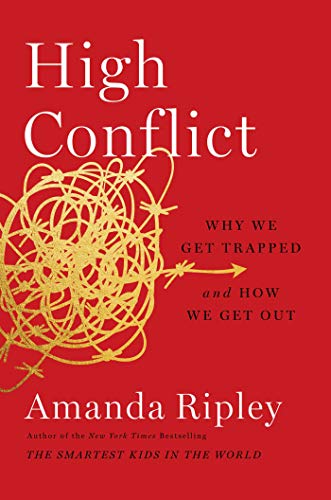
A while back, I heard a discussion on the radio about a book called “High Conflict.” As I listened, I thought, “That’s me. That’s what I’m feeling.” I put it on hold at the library, but I was way down the list. And when my turn came a few weeks ago, my heart quailed. I thought, “This is not going to be an enjoyable read.”

Then I pulled up my big girl panties and read it, praying throughout for openness. Because this, clearly, was God’s next signpost in my spiritual journey this year, toward balancing Godly anger at injustice with detachment. Because—also clearly—high conflict is NOT what God is calling me to.

Or any of us.

It was an incredible book… eye opening for myself, and extremely balanced in calling people across spectrums on the carpet. (You can tell a well balanced book by the fact that reviewers from both sides of the High Conflict that is American politics gripe about how their side was treated more harshly than the other.)

Reading that book did change me. Among the many valuable things she urged was to “muddy the waters.” The fact is that we like to put people in “us” and “them” categories, and we need to remember that we are all products of multiple influences, and just because two people share an identity in one of those influences doesn’t mean they will in others.

For myself, Catholic is my identity above all others. It is the filter through which I view everything. It is the measuring stick by which I gauge my secular work and my advocacy (“Disability Mom” and “writer” are tied for a close second in my identity)– and advocacy is, in fact, one of the red flags she warns of as an indicator of high conflict.

Anyway, the point wasn’t to detail the book, because everyone just needs to read it.

The point is that it helped me. It cooled down the temperature of my passion. Let me tell you, in the past two to three weeks, that cooling trend was critical… and not for any of the reasons I thought it would be. It’s just been a rough few weeks, personally.

And yet, yesterday I found myself triggered again. Multiple times. By multiple triggers, in multiple places. I found myself starting arguments with no one again.

The most bizarre thing was that I had a flashback to an incredibly contentious… and thankfully, defunct… relationship that caused me tremendous mental anguish over the course of COVID. I have zero contact with these people anymore. I have almost, if not completely, removed myself from these people’s orbit.

And yet, suddenly I was there in the middle of the emotions again, reliving the offenses, reliving the, well, anguish of trying to behave in a Christlike manner, cringing at the one mistake I made, raging at the certainty that they didn’t learn a thing from that conflict, that because of my mistake, they never admitted their own.

It was as if it happened yesterday instead of more than a year ago.

And sometime during Mass, as I sat behind the piano, wrenching my mind back to the liturgy again and again, it occurred to me: “I wonder if this is a spiritual attack.”

Because I WAS making progress toward what I know God is calling me to do.

I don’t have a neat and tidy bow to wrap around this post. I am just sharing the journey. Maybe high conflict, itself, is indication of a spiritual attack almost all of us are suffering…

Anyway… here’s that book you should all read, regardless of where you stand on any of the multitudes of points of contention we have all elevated to High Conflicts.

Anger, Detachment, and Love

This past Sunday, my pastor’s homily focused on the second reading, I Cor. 13, the famous explanation of love: patient, kind; bearing, believing, hoping, and enduring in all circumstances.

Along with that is the explanation of what love is NOT: quick tempered, brooding over injury. Those are the two that spoke to me personally.

Sitting there in the front row of church, it occurred to me that this was my next signpost from God about detachment vs. Godly anger. Anger tempered by love—the kind of love described in this passage–is a very different thing from plain old garden variety anger. You express it differently. In a healthier way.

So that is my food for reflection as I go through these days where the news cycle continues to provide daily reason for anger. How do I express that anger through a lens of patience and kindness, believing that there is hope?

Extra note: my youngest sister sent me a book a while back called “A Woman’s Guide to Claiming Space.” Not a religious book AT ALL, and the language sometimes reflects it. But one of the many things she wrote that struck me was the distinction between “nice” and “kind.” We often confuse the two, but nice, she argues, is what we’re conditioned to be—don’t make waves, never make anyone uncomfortable, stuff our own resentments, etc. Whereas “kind” is more authentic. You don’t have to be a jerk to tell the truth, is what it amounts to. I believe reading this book and having this reading come up in short order afterward is a God moment.

How To Detach

I set myself the task of cultivating detachment this year, but the problem is I don’t know how to start.

Last year, I had some path markers to follow through contemplation—people who had a tried & true method I could tap into. Incidentally, centering prayer will be with me the rest of my life. In fact, I’m pretty sure it’s a foundational skill for detachment.

But I don’t have that well-trodden path to follow in cultivating detachment. So the other day I just said a prayer, asking God to put sign posts in my pathway.

God does not disappoint.

Here are several things that have spontaneously crossed my online feeds in recent days. Things I have done nothing to seek out. Maybe they will give you food for thought as they have given me:

#1. a blog post

If you can’t take in anymore, there’s a reason: it’s all too much. What I took from this blog post: Social media, news, everything that’s wrong in the world is important, but we were only built to withstand so much of it. (Language alert.)

#2. … same message.

#3: not a religious article, just a summary of some research that supports the effort.

How To Be Ambivalent. The attitude they are calling ambivalence sounds a lot like what I am seeking: a degree of emotional distance from difficult realities. If it doesn’t matter so much to you, you’re more likely to be able to approach it objectively. That isn’t what they claim to be advocating for, but that’s how it reads to me.

#4: Pope Francis never disappoints, either. I get these “Journey with the Pope” emails every day, I suspect because I donated to Missio.


The Now And The Not Yet

At this time of year, Catholic sites are generally be gentle and meditative, wreathed in evergreen and violet candles. (Did you see what I did there? 🙂 )

I’m not feeling that this year. Advent is normally a big thing in my household, but this year I’m giving myself a pass on some of our traditions. It’s just not where we are right now. I told my spiritual group yesterday that this year, I’m writing a book and learning how to live with a celiac diagnosis for my child, and that’s quite enough mental/spiritual wrestling for me this Advent.

But what I AM doing this Advent is pondering the tension that is intrinsic to life in the faith.

The kingdom of God is now, here, in the person of Jesus, but also unfolding in real time, and never to be fully realized in this world.

We are to accept authority—but at the same time, questioning and wrestling is the only way we grow in faith. Without it, we stagnate. Even fester, growing ever more rigid in our binary, simplistic view of the world. Kind of like all those pirates on Davy Jones’ ship in Pirates of the Caribbean—ever more inflexible, until eventually we freeze solid and lose our humanity altogether. In other words, we are called to submit, but also to be prophetic.

We are given, by virtue of our baptism, the power to heal—this is a conversation we had yesterday in my small faith group—and yet I would argue that the chronic conditions of my life are the things that have allowed me to grow.

I think there’s a lesson in all this for me as I begin this discernment surrounding detachment. Because that is the essential question I can’t wrap my brain around—the one I shared here a couple of weeks ago. Godly anger is what fuels us to pursue Godly justice. Yet this seems to stand at odds with the idea of detachment, which would suggest that we remain a step back emotionally, setting aside such passions altogether.

That’s why this graphic caught my attention when it crossed my feed last week. It’s not about religion, but my faith is integral to my view of the world, and that gets expressed through real-world events, i.e. the news. So it resonated on the level of faith for me.

In my last appointment, my counselor and I were grappling with balance, and she said, “I just want to make sure you know that balance means it’s always changing. It’s not the same from day to day.”

She was right, of course; I’ve known this for a long time in my family life—that one or another of my responsibilities takes precedence at any given time, and it’s constantly shifting. We tend to think of balance as a static thing: a beam BALANCED on a point. But that only works if all the factors acting on it are static. As the forces of my life act upon me, I have to adjust constantly. I do it automatically on a bicycle. Or walking. Or when a small child runs and tackles me while I’m sitting in the middle of the floor.

But somehow when it comes to the bigger things, the spiritual life, I have this fantasy that there’s some magical island within me that if I can just find it, I’ll never have to adjust again.

Photo by Chinmay Singh on Pexels.com

But the reality of the “now-and-not-yet” dynamic is that those two things DO stand at odds. That tension will never be resolved in this life. On one side is the passion to see God’s justice made real in the world: “Thy will be done, they kingdom come on earth as it is in Heaven.” We pray for that daily. God’s will for the earth can’t happen if we shrug our shoulders and say, “Oh well, in Heaven all will be well, so I just won’t worry about everything that’s wrong.”

At the same time, the righteous anger that fuels the passion can easily become unhealthy. Crippling. Damaging to the connection to God and neighbor. Detachment is necessary too.

There’s a tension there that can’t be avoided. Neither of the extremes contains the whole truth. The truth comes in the balance between them.

But finding it… that’s the thing I’m beginning to grapple with now.