Wokeism vs. MAGA…

Here’s a thing I would very much like to understand: how the word “woke” can be used as an insult by Christians.

Look up “awake scriptures” on your search engine and see what comes up. Awake is a GOOD THING for a Christian. It is literally all over the New Testament.
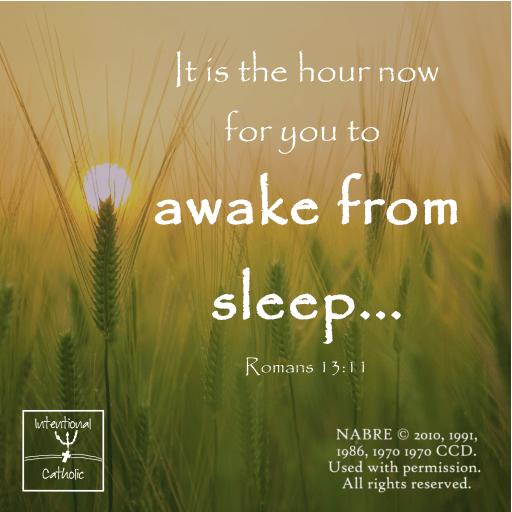
Background Image by KBCH from Pixabay

Honestly, I don’t really understand what “woke” even means to the people who use it as a pejorative. It seems to be just the latest demeaning, un-Christlike insult for people who lean left. (Feminazi, libs, libt—(will not finish that one, you get the idea).

Last week, I decided if I am looking for podcasts, I should try to find some that are specifically Catholic. So I did a basic search, and I happened across an episode that featured a woman talking about being “awake, not woke.” I had a pretty visceral knee-jerk reaction against this, but I thought, perhaps this is precisely the thing I need to listen to. Maybe this idea of “awake, not woke” is the middle ground I am looking for.

It wasn’t. Middle ground, I mean. No, it was a laundry list of why everything about “woke” culture was evil. I believe that word was even used.

The history this woman claimed was presented as a settled fact with not one detail of evidence that would help me even know how to begin fact checking it. So I’ll leave that aside.

But among the other arguments presented against “wokeism” were a plethora that were listed with no self-awareness. In other words, every single one of them applies to the MAGA crowd just as much as it applies to the “woke” crowd. For instance:

Wokeism functions like a cult, wherein people stop thinking critically. (Also true of MAGA? Yup.)

It’s all about power. (Also true of MAGA? Yup.)

People cut others out of their lives because they disagree. (Also true of MAGA? Yup.)

It leads naturally to violence, i.e. the BLM riots. (Ummmm…. January 6, anyone?????)

It is about indoctrination. (And laws that suppress historical realities because it might make whites “feel bad,” allowing only a narrative of American greatness narrative? That’s not indoctrination?)

Using “privilege” as a pejorative. (Like using “liberal” or “woke” as pejoratives?)

Targeting Christians with violence. (Like… I don’t know, the increase in hate crimes?)

It has control of media, which misleads people via bias. (Ummmmm…. in the last week we learned that Fox News knew they were telling lies about the election and about Dominion, and kept doing it because they thought otherwise their audience would jump ship for more extreme far-right sources… How does this not count toward calculations of media bias?)

I am laying all this out because I am honestly baffled. I look at everything in the world through the lens of my Christian faith. Through the teachings of Jesus. And for sure, some things in our culture are really far out there. (Although a lot of it has to do with greed and the idolatry of money, and nobody in Christian World ever seems to see that as a problem…)

I would have much more sympathy for someone who wanted to call out the problems in the far left if they would acknowledge that THE SAME PROBLEMS EXIST ON THE FAR RIGHT. At least as much.

But instead, there’s a double standard. All these things are problems when it’s on the left, but when it’s on the right, it… makes us a Christian nation? I don’t get it. Why is “wokeism” bad, and MAGAism isn’t?

There’s an old truism about how eventually, when you go far enough left and far enough right, you end up in the same place. Hence, you have Hitler on the right and Stalin on the left. But they’re both brutal dictators. Eventually, the extremes wrap around and hold hands.

I know this sounds like my usual rant, but I am genuinely baffled. I really want someone to explain this. Because from my point of view as a Catholic, we cannot demonize one variety of extremism while wholeheartedly embracing another. That’s not Christ at all. Jesus had plenty to say about people who held one standard for themselves while condemning others.

#unworthyofchrist

For Love of a Good Challenge

Photo by Tom Swinnen on Pexels.com

It is a quiet Sunday morning as I sit here writing. Practicing NFP means that because I must take my temperature even when I don’t have to get up early, I am often up for the day long before the rest of the house. I do my neck and back and shoulder and leg stretches—targeting all the various parts of my body that could render me nonfunctional if I do not—and listen to Scripture or podcast.

Intentional Catholic has been on my mind a lot lately, but the questions I need to grapple with are all still too unformed.

I’ve always valued a good, challenging homily or reflection. One that calls me to look honestly at myself and my weaknesses. It’s not a threat because I am a type A person who wants to be better today than yesterday, and better tomorrow than today. I genuinely want to follow God above all else. I am okay with being challenged to face my failures. How else can I be better tomorrow than today?

I suppose this is a natural outgrowth of being a musician and writer. Critique is baked into the formation of both those professions. First my band directors, then my private flute teachers, looked for what was holding me back and taught me how to climb over the obstacles to the next plateau. In the writing world, I’ve worked with editors and critique partners for sixteen years. Before my novel caught the eye of my literary agents, I collected something like four hundred rejection letters, of all lengths and varieties, from the one-line generic to the “I want this to look thought out but it’s really a form rejection” to the heartbreaking near misses. One music rejection, out of all others, still gives me the heebiejeebies, because what they pointed out was right and I should have seen it myself.

All this to say, I value being challenged. Good challenge. Not nonsense, conspiracy-theory, poor information, one-set-of-rules-for-The-Other-Guys-and-a-totally-different-one-for-mine challenges. Those just enrage me. And I would say I suspect they enrage God too, except I suspect God has a teeny bit broader perspective on the universe than I do, and probably finds it grieving rather than enraging.

As I approach the news these days, I’m constantly filtering my immediate, knee-jerk reaction through the knowledge of my biases. That is a relatively new manifestation of my spiritual journey. I am a little slower to get angry now because I can see the inconsistencies inherent in my knee-jerk reactions. It doesn’t remove the inconsistencies, but just being conscious of them helps put things in perspective.

What that doesn’t help with is the deep, existential, Godly-justice-centered outrage inspired by the failure of so many others to recognize THEIR inconsistencies.

And so I struggle on.

High Conflict and Spiritual Attack

Photo by Moose Photos on Pexels.com

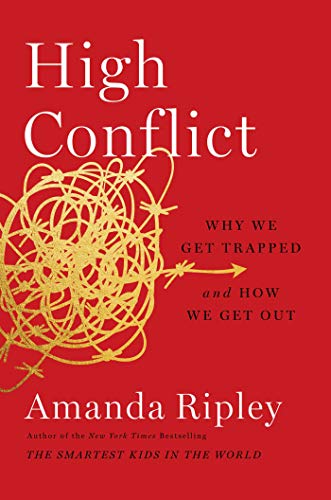
A while back, I heard a discussion on the radio about a book called “High Conflict.” As I listened, I thought, “That’s me. That’s what I’m feeling.” I put it on hold at the library, but I was way down the list. And when my turn came a few weeks ago, my heart quailed. I thought, “This is not going to be an enjoyable read.”

Then I pulled up my big girl panties and read it, praying throughout for openness. Because this, clearly, was God’s next signpost in my spiritual journey this year, toward balancing Godly anger at injustice with detachment. Because—also clearly—high conflict is NOT what God is calling me to.

Or any of us.

It was an incredible book… eye opening for myself, and extremely balanced in calling people across spectrums on the carpet. (You can tell a well balanced book by the fact that reviewers from both sides of the High Conflict that is American politics gripe about how their side was treated more harshly than the other.)

Reading that book did change me. Among the many valuable things she urged was to “muddy the waters.” The fact is that we like to put people in “us” and “them” categories, and we need to remember that we are all products of multiple influences, and just because two people share an identity in one of those influences doesn’t mean they will in others.

For myself, Catholic is my identity above all others. It is the filter through which I view everything. It is the measuring stick by which I gauge my secular work and my advocacy (“Disability Mom” and “writer” are tied for a close second in my identity)– and advocacy is, in fact, one of the red flags she warns of as an indicator of high conflict.

Anyway, the point wasn’t to detail the book, because everyone just needs to read it.

The point is that it helped me. It cooled down the temperature of my passion. Let me tell you, in the past two to three weeks, that cooling trend was critical… and not for any of the reasons I thought it would be. It’s just been a rough few weeks, personally.

And yet, yesterday I found myself triggered again. Multiple times. By multiple triggers, in multiple places. I found myself starting arguments with no one again.

The most bizarre thing was that I had a flashback to an incredibly contentious… and thankfully, defunct… relationship that caused me tremendous mental anguish over the course of COVID. I have zero contact with these people anymore. I have almost, if not completely, removed myself from these people’s orbit.

And yet, suddenly I was there in the middle of the emotions again, reliving the offenses, reliving the, well, anguish of trying to behave in a Christlike manner, cringing at the one mistake I made, raging at the certainty that they didn’t learn a thing from that conflict, that because of my mistake, they never admitted their own.

It was as if it happened yesterday instead of more than a year ago.

And sometime during Mass, as I sat behind the piano, wrenching my mind back to the liturgy again and again, it occurred to me: “I wonder if this is a spiritual attack.”

Because I WAS making progress toward what I know God is calling me to do.

I don’t have a neat and tidy bow to wrap around this post. I am just sharing the journey. Maybe high conflict, itself, is indication of a spiritual attack almost all of us are suffering…

Anyway… here’s that book you should all read, regardless of where you stand on any of the multitudes of points of contention we have all elevated to High Conflicts.

How To Detach

I set myself the task of cultivating detachment this year, but the problem is I don’t know how to start.

Last year, I had some path markers to follow through contemplation—people who had a tried & true method I could tap into. Incidentally, centering prayer will be with me the rest of my life. In fact, I’m pretty sure it’s a foundational skill for detachment.

But I don’t have that well-trodden path to follow in cultivating detachment. So the other day I just said a prayer, asking God to put sign posts in my pathway.

God does not disappoint.

Here are several things that have spontaneously crossed my online feeds in recent days. Things I have done nothing to seek out. Maybe they will give you food for thought as they have given me:

#1. a blog post

If you can’t take in anymore, there’s a reason: it’s all too much. What I took from this blog post: Social media, news, everything that’s wrong in the world is important, but we were only built to withstand so much of it. (Language alert.)

#2. … same message.

#3: not a religious article, just a summary of some research that supports the effort.

How To Be Ambivalent. The attitude they are calling ambivalence sounds a lot like what I am seeking: a degree of emotional distance from difficult realities. If it doesn’t matter so much to you, you’re more likely to be able to approach it objectively. That isn’t what they claim to be advocating for, but that’s how it reads to me.

#4: Pope Francis never disappoints, either. I get these “Journey with the Pope” emails every day, I suspect because I donated to Missio.


A house divided…

I have not been posting much the last few months. I keep chewing over the same baffling questions again and again, and feeling that I am shouting into a void. So I’ve focused my energy instead on my fiction. There’s precious little time in my life for splitting my focus these days, anyway.

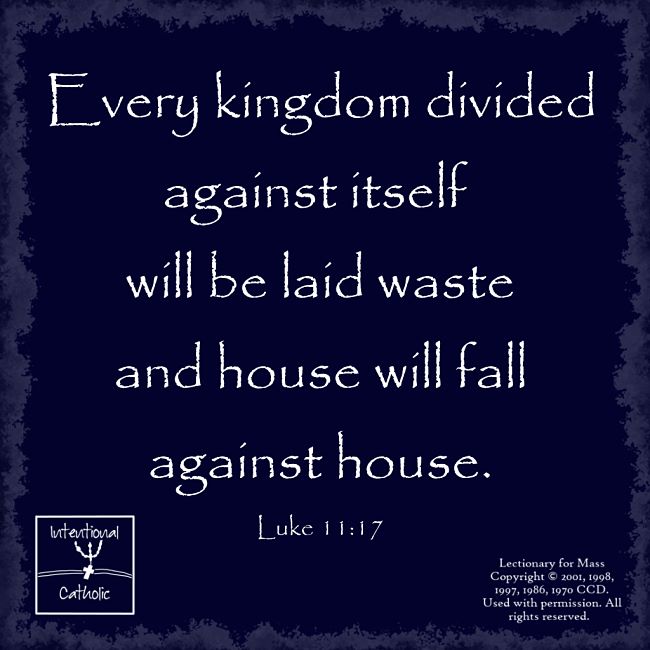
But the US bishops’ daily reflection Friday morning was on the topic of division and unity. A house divided cannot stand, Jesus cautioned. If good work is being done, it can’t be of the devil. And if there’s division, it is not of Christ.

The Church is a hot mess of division right now, just as our nation is. Every time I come up against an entrenched position that baffles me, because it is so clearly contrary to my faith, and it’s being held by people who are using their faith as justification for their beliefs, I think of this question of division. I think, “How can this be, when we all claim to believe the same things?”

Spoiler alert: if you’re reading this post in hope of there being an answer at the end, prepare to be disappointed.

Every time I come up against one of these, I think, “There’s no way God could be calling both of these sides to these beliefs. Is there?” Then I pause to search my own conscience and try to see how I could be the one who is wrong. I frequently find that I am wrong in my anger toward, judgment of, and assumptions about people who think differently than me. But I have rarely found the Spirit nudging me that I am, in fact, wrong in my beliefs. Not given the information I have.

So then I go and do research to see if my information could be wrong. I look at the sources, I think, “Nope, not going to read that, it’s too far left and I can’t trust it to be objective. Nope, not going to read that either, because that’s clearly a group with a dog in this fight. There, that’s a moderately-right-leaning source, that should give me a good counterbalance to my own biases.” Occasionally I moderate a position; I think, “this thing people are freaking out about on the left is probably not as big a deal as they’re making it out to be.”

But not often.

It is deeply disturbing to me that so much of our discourse these days is arguing over things that are so easy to disprove. It really isn’t hard to discern between credible sources and conspiracy-theories.

A good friend of mine recently left Facebook, because it was an exercise in scrolling through things that made her angry. “I feel like we’re conditioned to look for the next thing to get angry about,” she said. “I just needed to get away from that.”

How do we seek unity—Christ—instead of division—the devil—when it seems that so many of our conflicts are based, not on reason, but on appeals to all that is sinful within us—our selfishness, our lack of empathy for others?

Random Reflections

Photo by Adonyi Gu00e1bor on Pexels.com

Bishop Barron’s reflection on today’s Gospel says that “taking up our cross” means more than being willing to suffer. It means absorbing violence and hatred by way of forgiveness and nonviolence.

That sentiment really struck me in light of the last two weekends’ Old Testament readings. I wrestle often with what the “prophet” part of “priest, prophet, king” means in practical terms. What troubles me is that everyone thinks they’re speaking for God, even when they stand on opposite sides of a conflict. Worldly opposition is to be expected, but human nature has a way of interpreting any opposition as persecution, thus confirming one’s own “rightness,” even if that opposition is actually an invitation from the Spirit to recognize that one’s own heart and attitudes and understanding need to grow.

How do we tell the difference?

I pray over this all the time, because it’s hardly fair to point that commentary at someone else without considering how it might apply to me too. But it troubles me how often, how glibly, we say the words “Thy will be done on earth as it is in Heaven,” without realizing the soul-scouring that follows when we actually mean them.

This is all kind of scattered and disorganized, but it hopefully illustrates why Barron’s words struck me so forcefully this morning. I want to see God’s will done on earth, but I can’t change people’s minds; only God can do that, and God won’t force them; they have to be willing to be changed. So that’s two realities I have no control over. All I can do is bear the cross. Absorb the violence and hatred, and meet it with attempts at understanding and compassion rather than outrage.

Help me, God. Because this is way bigger than me.

The chicken and the egg (or: double standards in Christianity)

“Hey,” my husband whispered to me before Holy Thursday Mass. “I forgot to tell you. Pew research did a new survey and the number of people who go to church is below 50% for the first time ever.”

My first reaction was: And Christianity will blame the secular culture instead of looking in the mirror and examining whether our own failures are the problem.

Actually, it’s probably a chicken-and-egg situation. The culture is definitely getting more hostile to religion. But then again, religion keeps giving more reasons for the hostility.

I know. Them’s fightin’ words, but painful though they might be, I think they’re fair.

The trouble is that the Gospel tells us we’re SUPPOSED to expect hostility from the world. But somehow, we’ve translated that into a persecution complex. We never stop to examine our own attitudes, words, and behaviors for how well they reflect the Gospel. We just assume that any pushback we encounter must, by definition, be the culture’s problem rather than ours. It couldn’t possibly be that we are misrepresenting our faith.

Meanwhile, Christianity fails to recognize how incredibly uneven we are in HOW we choose to stand at odds with the world. There are these huge double standards.

Like: Christian culture is pro-life, EXCEPT when it requires taxpayer money to support people most at risk of feeling the “need” for abortion (because of generational poverty and inequality of opportunity, etc., etc).

Like: Christian culture is pro-life, except when it infringes on “personal freedoms” (cough-cough-masking).

Like: Government should stay out of my business, except when it’s about homosexual relationships or abortion, and then of course it’s the government’s business, absolutely.

Or: Sexual assault and harassment are sinful, but how dare we ruin the life of the accused? (Never mind the life of the victim. Whatever. We’ve been sacrificing them for millennia.)

Or: Honesty and integrity are fundamental to Christian belief—they’re in the Ten Commandments—but how many people have wholeheartedly, even rabidly, embraced a lie about stolen elections that has zero basis in fact?

I’ve been trying not to write these kinds of posts lately. Nobody needs me haranguing them; it’s not particularly effective at anything except making people mad. So I’ve been trying to focus my posts here on working out my own spiritual journey instead of lambasting everything that’s wrong with the world. I have spent this Lent praying for “enemies,” and more importantly, for the heart to do so authentically while remaining in union with God’s will. So much is happening in my heart this year—I am journaling it, bit by bit, but I’m deep in the weeds and I can’t synthesize it yet.

But there are times when my frustration comes out. And this is one of them. And maybe, after all, Good Friday is not a bad time to have our collective conscience stung.

“Demanding and even tiring”

I’ve been swamped lately with other professional obligations, and Intentional Catholic has had to take a back seat. When I came downstairs this morning, I knew I needed to dig back into Fratelli Tutti, but I was not prepared for the section I was reading to speak so powerfully to the event coming up next Sunday.

March 21st is World Down Syndrome Day, chosen because Down syndrome, or Trisomy 21, is THREE copies of the TWENTY-FIRST chromosome.

For fourteen years now, Down syndrome advocacy has been a driving force in my life. I was not prepared to be a special needs mom. Having grown up in the pro-life movement, the moment when I had to confront my own distinctly un-pro-life reaction to the news was a pretty bruising collision with the mirror.

The point Pope Francis makes in this excerpt really hit home after a decade and a half of mighty struggles on behalf of our daughter. “A demanding and even tiring process,” he calls it, and let me tell you—you have no idea just HOW demanding and tiring.

But he’s right: this demanding and tiring process DOES contribute to the formation of a conscience capable of acknowledging each individual as unique and unrepeatable. I would not be where I am today, in my growth as a Christian, had God not placed this precious gift in my womb, forcing me to look in the mirror and recognize a host of inconsistencies between what I claimed to believe and how those beliefs conflicted with other deeply-held convictions about how the world was “supposed” to work.

I will never be done grappling with my profound failures around these issues, but I am grateful for the gift of my child, who to this day stretches me beyond what I think I am capable of.

For the next week, leading up to World Down Syndrome Day, I will share here some of the reflections I’ve written or presented over the years as I wrestled with all this.

Praying for “enemies”

I woke up early this morning with this Scripture in my mind. I sort of wince at the words “enemies” and “persecute.” They seem like really extreme words. I’d like to think I don’t have any enemies. Opponents, yes, but not enemies. And persecute? There’s such a glut of persecution complex these days, where people see themselves as harassed and mistreated and use that as an excuse not to examine their own behavior and beliefs for places where they’re out of line. I feel a tremendous antipathy toward applying this Scripture to myself.

Still, this Lent I knew I needed to connect my spiritual practice to the examination of conscience I was already going through, and while I may quibble with the extremity of the labeling, the concept Jesus lays out here is exactly what I most need to do right now.

But it’s hard, and not just from the perspective of humility. HOW does one pray for one’s enemies? I mean, if you pray for them to be converted and changed, you’re assuming you are 100% right and they are 100% wrong, and we all know how Jesus felt about such self-righteousness. I can’t pray for them to find success in their endeavors, though, because the reason I feel such angst toward them is because I see their endeavors as deeply contrary to God’s will. And praying for God to bless them seems like a cop-out.

So this is my Lenten discipline: seeking to find the words that can be prayed authentically, for people I disagree with profoundly, while remaining humble enough not to think I have all the answers.

Right = duty

On my spiritual journey right now I am trying to focus on my own failings rather than those of the world. I see this playing out all over the place in the world (please tell me you can too), but I’m trying to focus on changing me right now. I could point this at newsworthy items. I could point it at my kids. Hoo-boy, do I ever see it play out there. But I’m keenly aware that if I want the conversion of the world, I have a duty to work with God for my own conversion first. Because “the world” includes me, too.